In the mid 1950’s Inez reached age 30, and she left NYC to move back to the Capitaland Region of upstate New York, this time for good. She was employed as a junior high school art teacher in the Troy, NY school district.
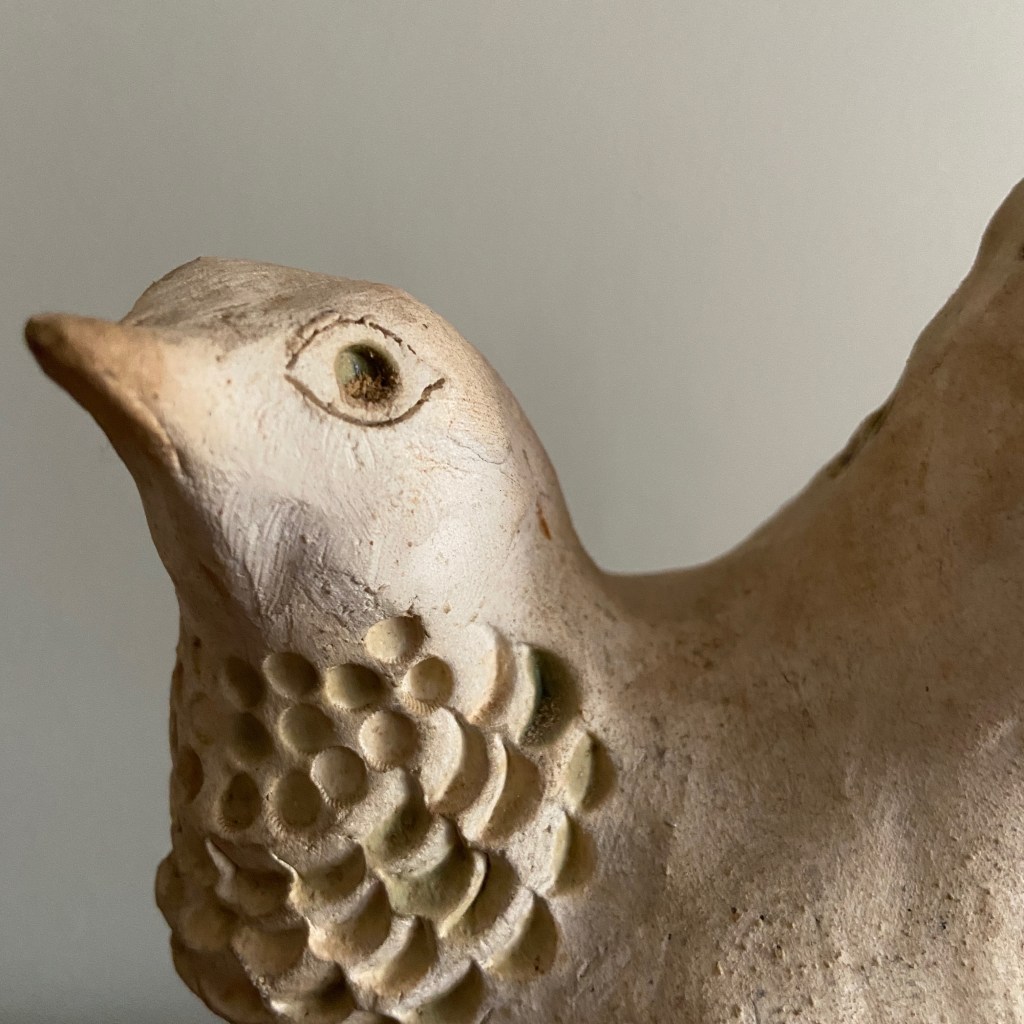
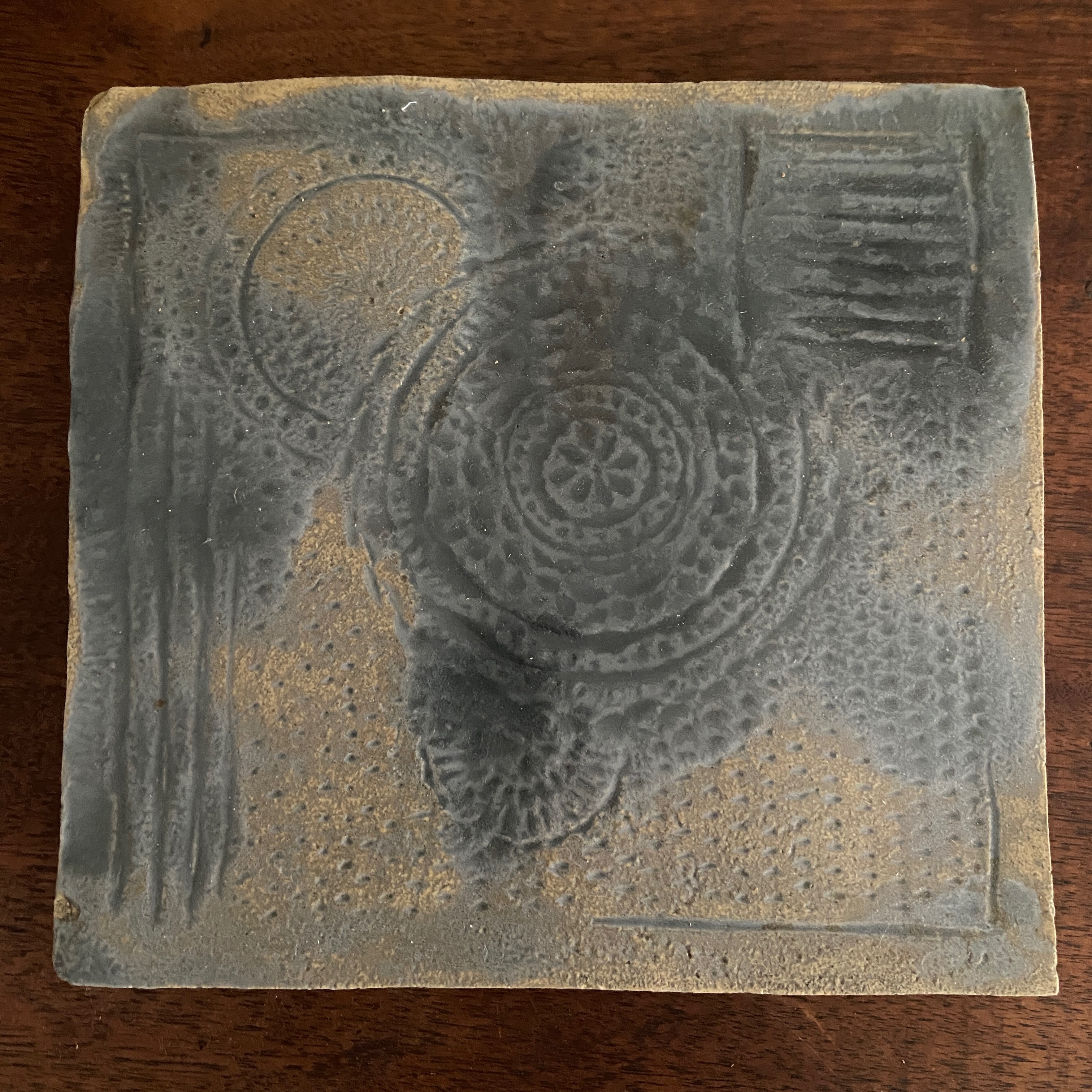
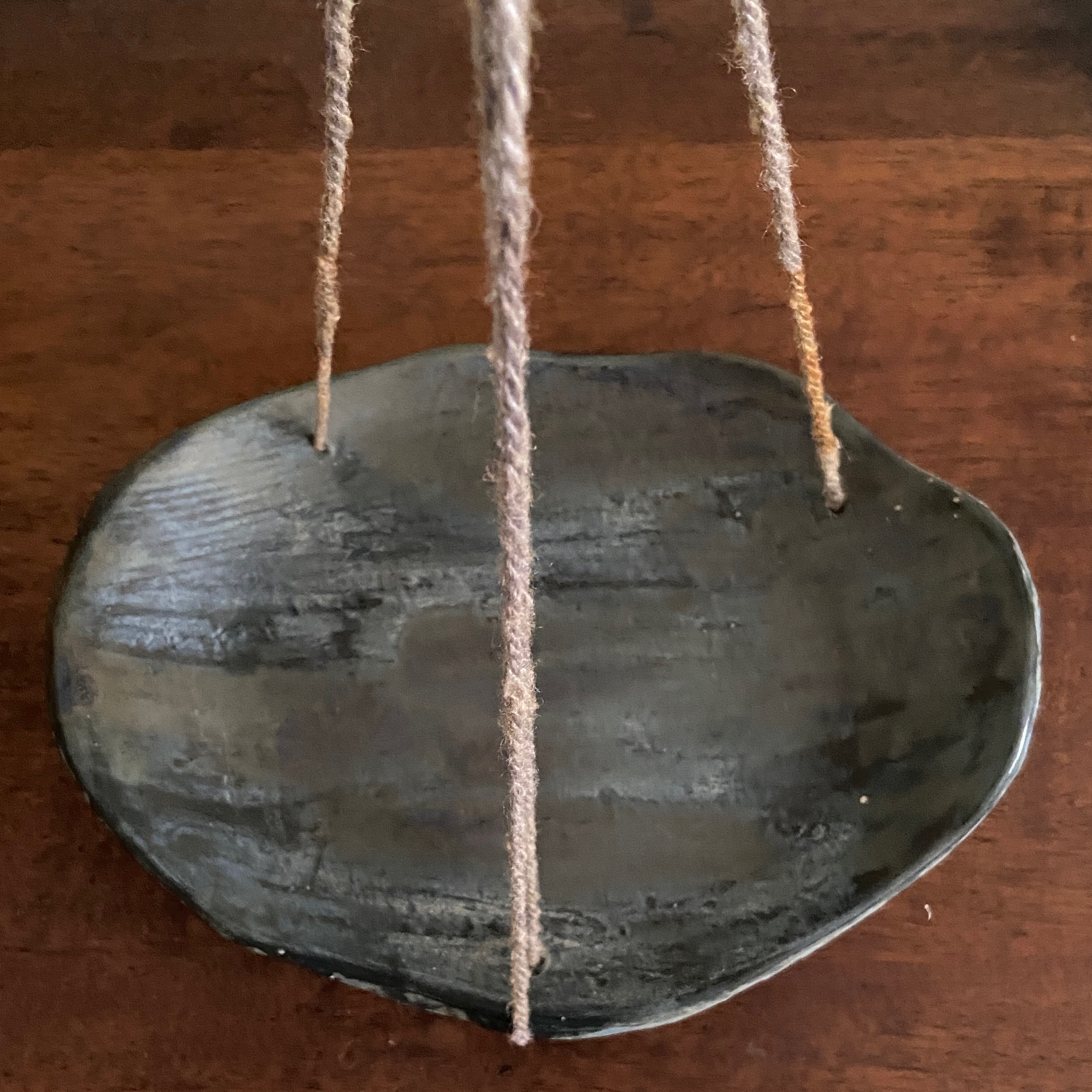
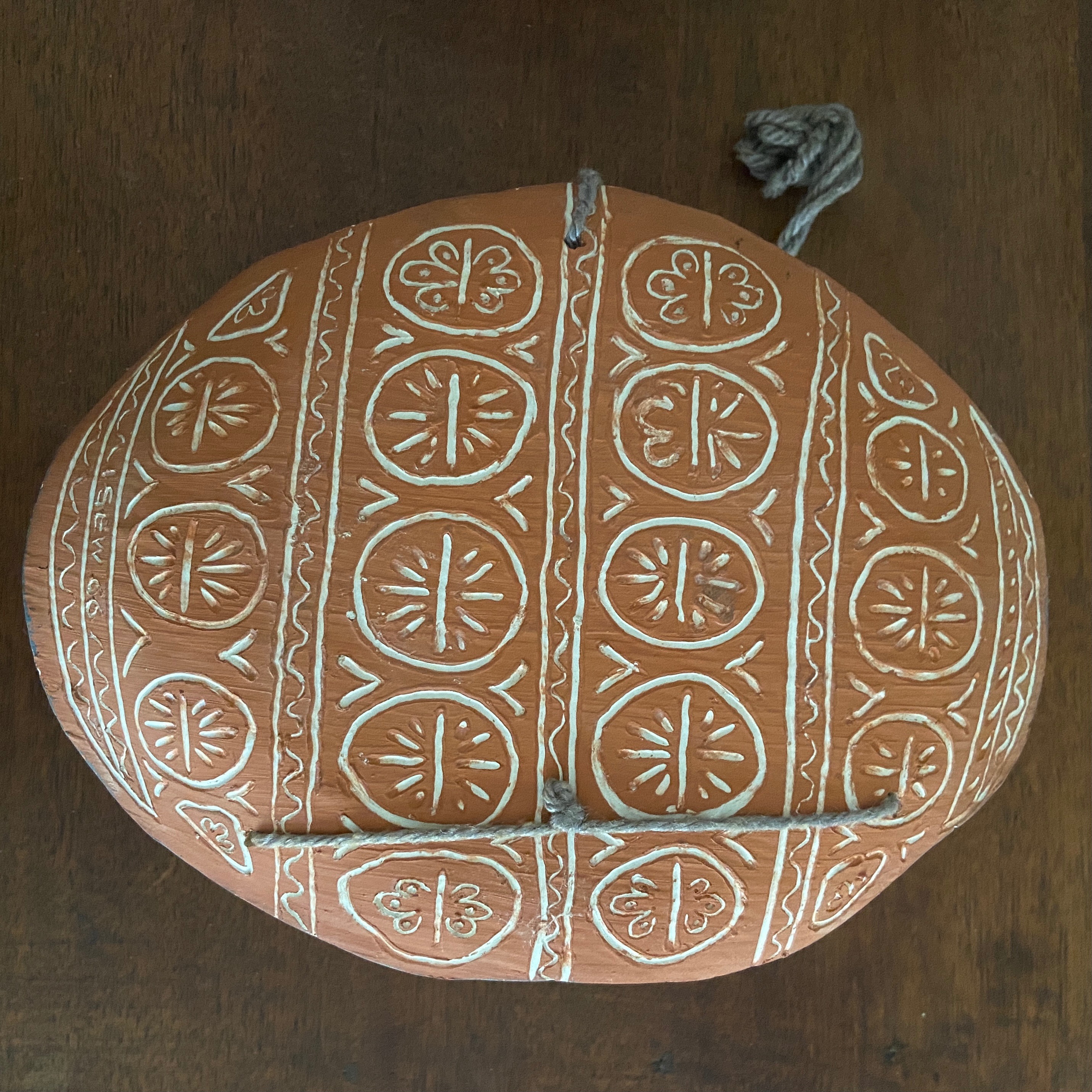
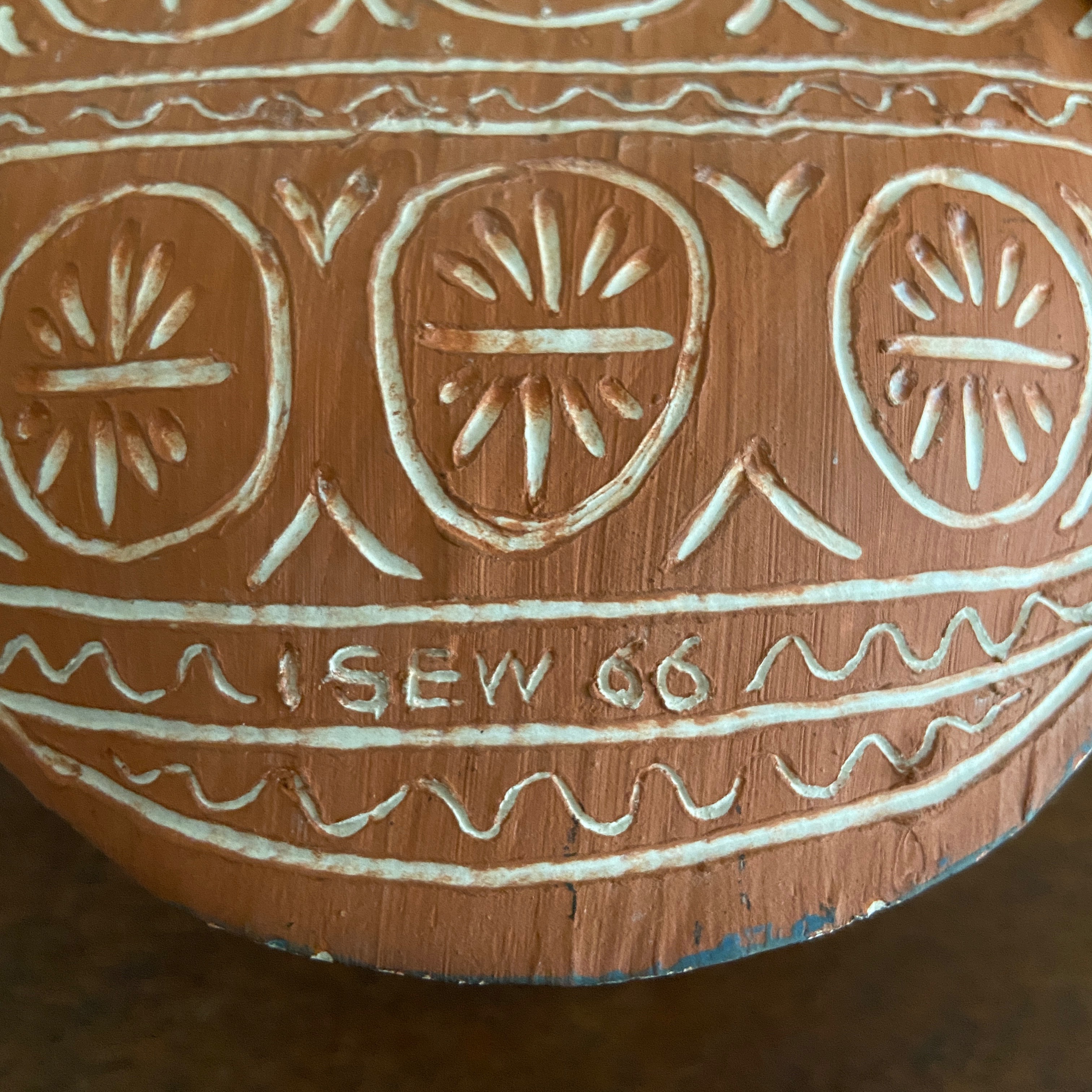
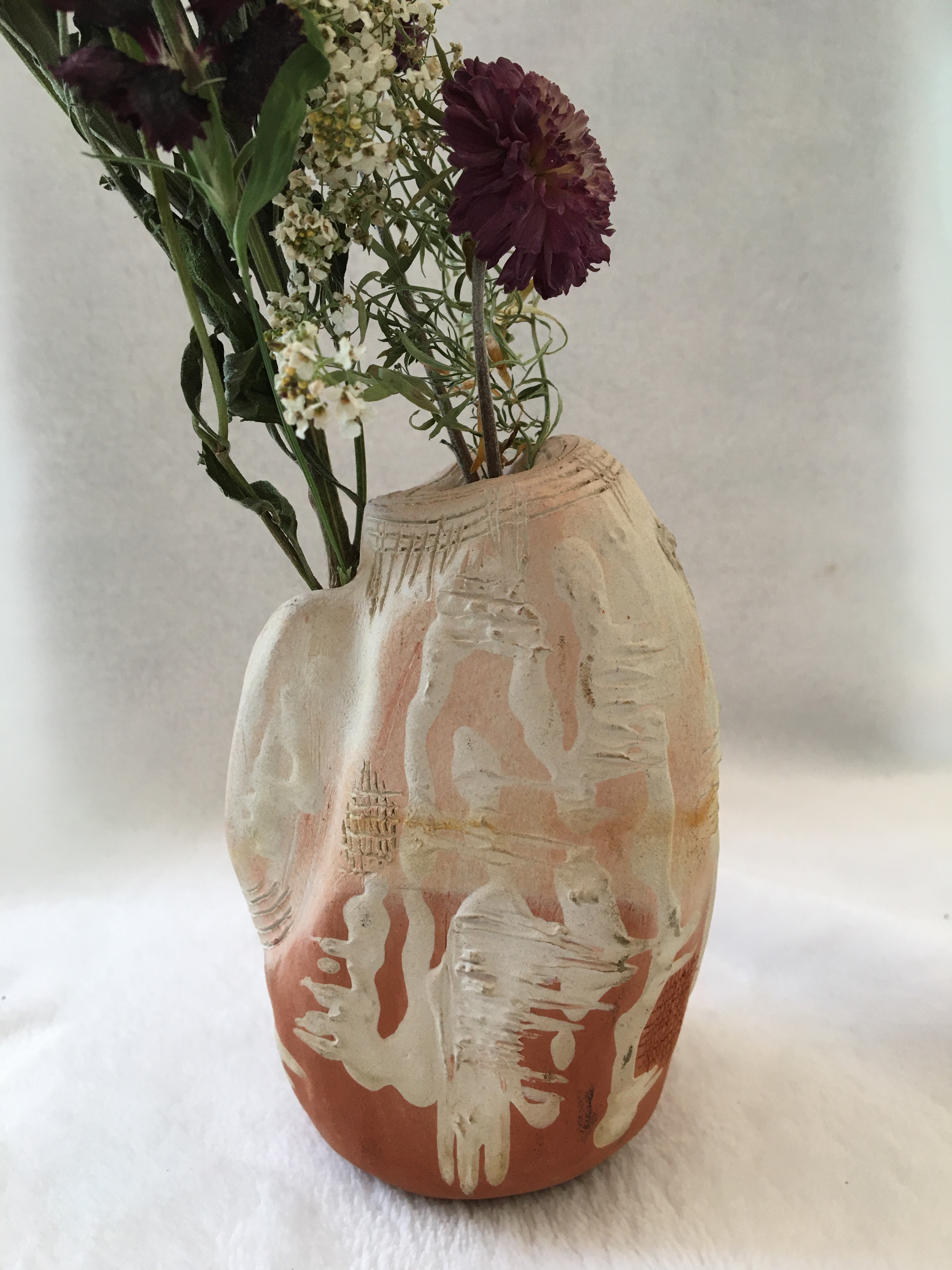
From the late 1950’s and through the 1960’s, Inez dabbled in the ceramic arts. As you will see in the images of her work below, she continued to primarily be inspired by nature.
Many of her works at this time include birds, which will be a focus of her work in the 1980’s.
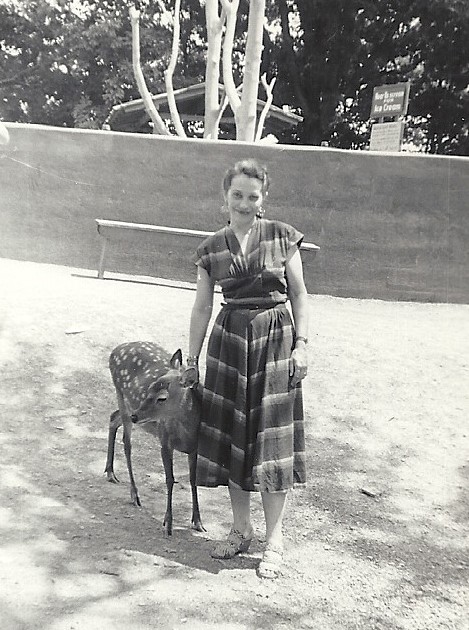
Inez Clute, Catskill Game Farm, mid 1950’s
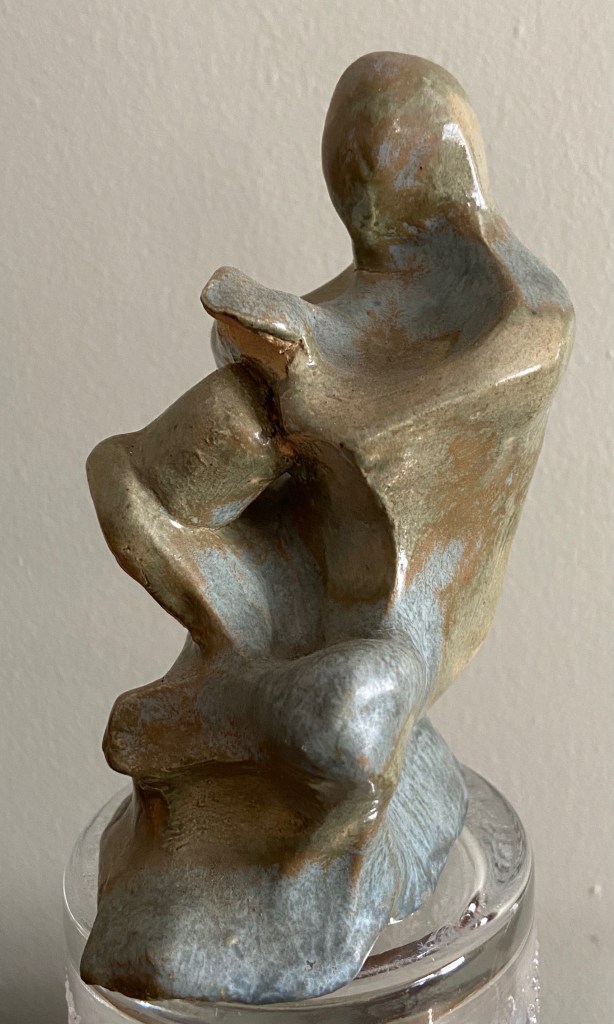
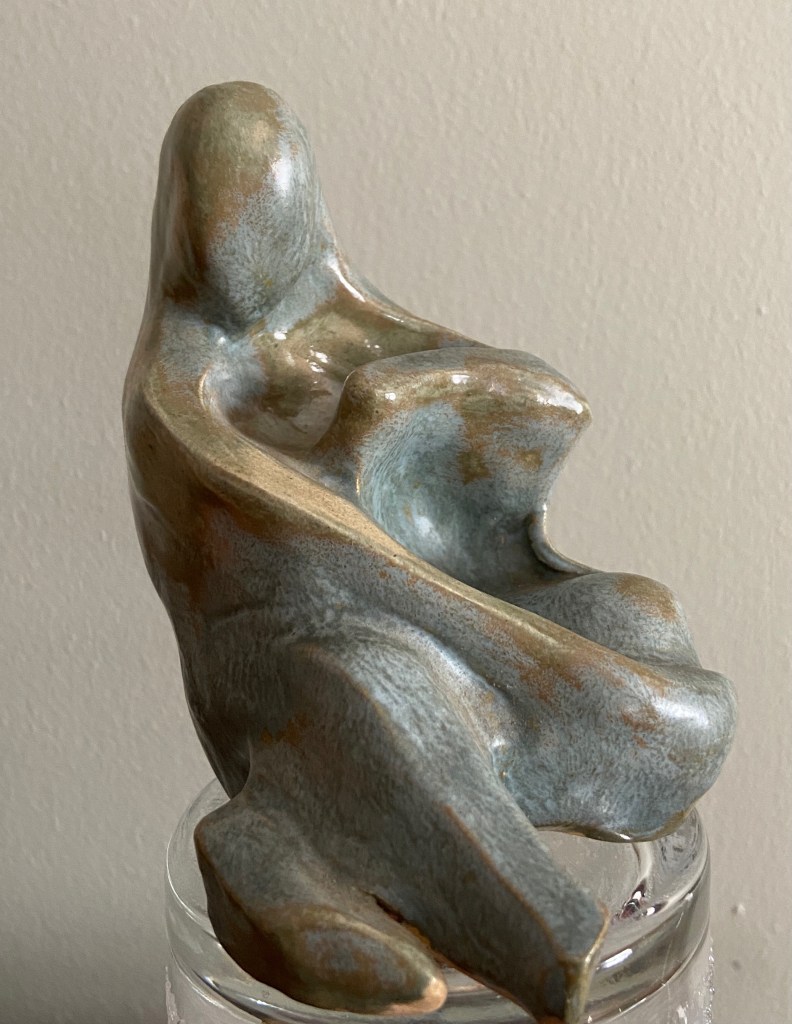
Man and Woman Seated Figures – Sculpture Series – 1957
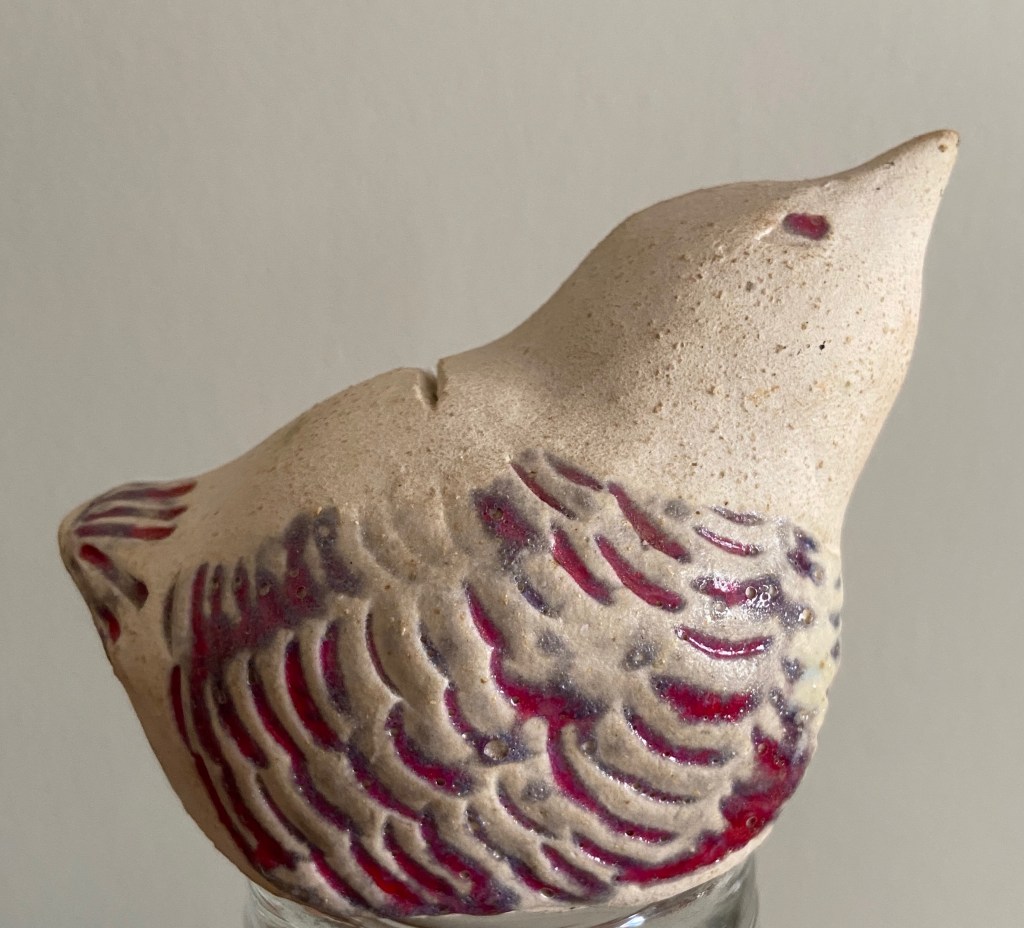
The next group of work is of animals – owl and birds. The red bird is a recipe card holder. The piece with three birds is dated 1966.
Owl
Red Bird. Recipe Card Holder.
Red Bird. Recipe Card Holder. Side View
Three birds. 1966
Three Birds. Top detail. 1966.
Three Birds. Detail. 1966
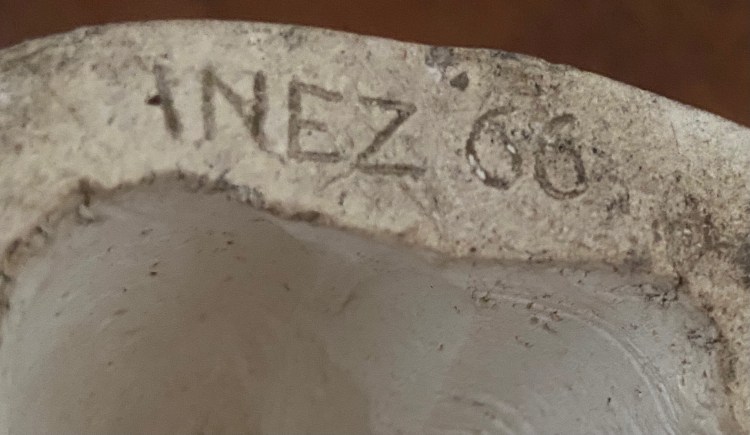
This last set is of practical household item:. Trivet. Plant hanger. Detail of bottom plant hanger and her signature. Candle holder. Vase.
Photos in this post are courtesy of Karen A. Sewell
Coming up: In the next post, Inez will marry. There will be new influences in her artwork and US laws of the 1950’s forcing a change in her career.
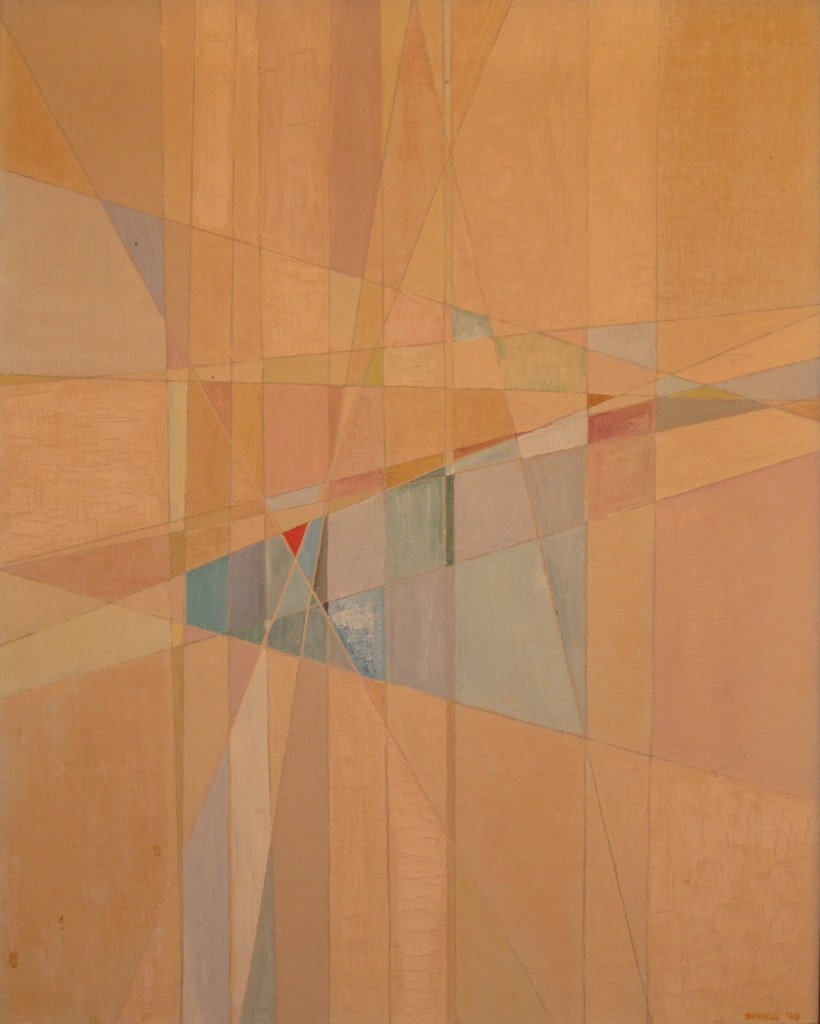
In the early 1950’s, the abstract expressionism art movement began. Artists such as Jackson Pollock and Helen Frankenthaler were experimenting with shapes, colors and forms, coupled with free and spontaneous emotion in their paintings. Many of these abstract expressionists lived, worked and showed their art in the galleries of NYC, the hub of this movement – right where Inez was living.
Inez clearly took note of this trend. Follow this link to get a flavor of abstract expressionism and see the interesting use of color and shapes. You will then see some resemblance in the works of Inez below.
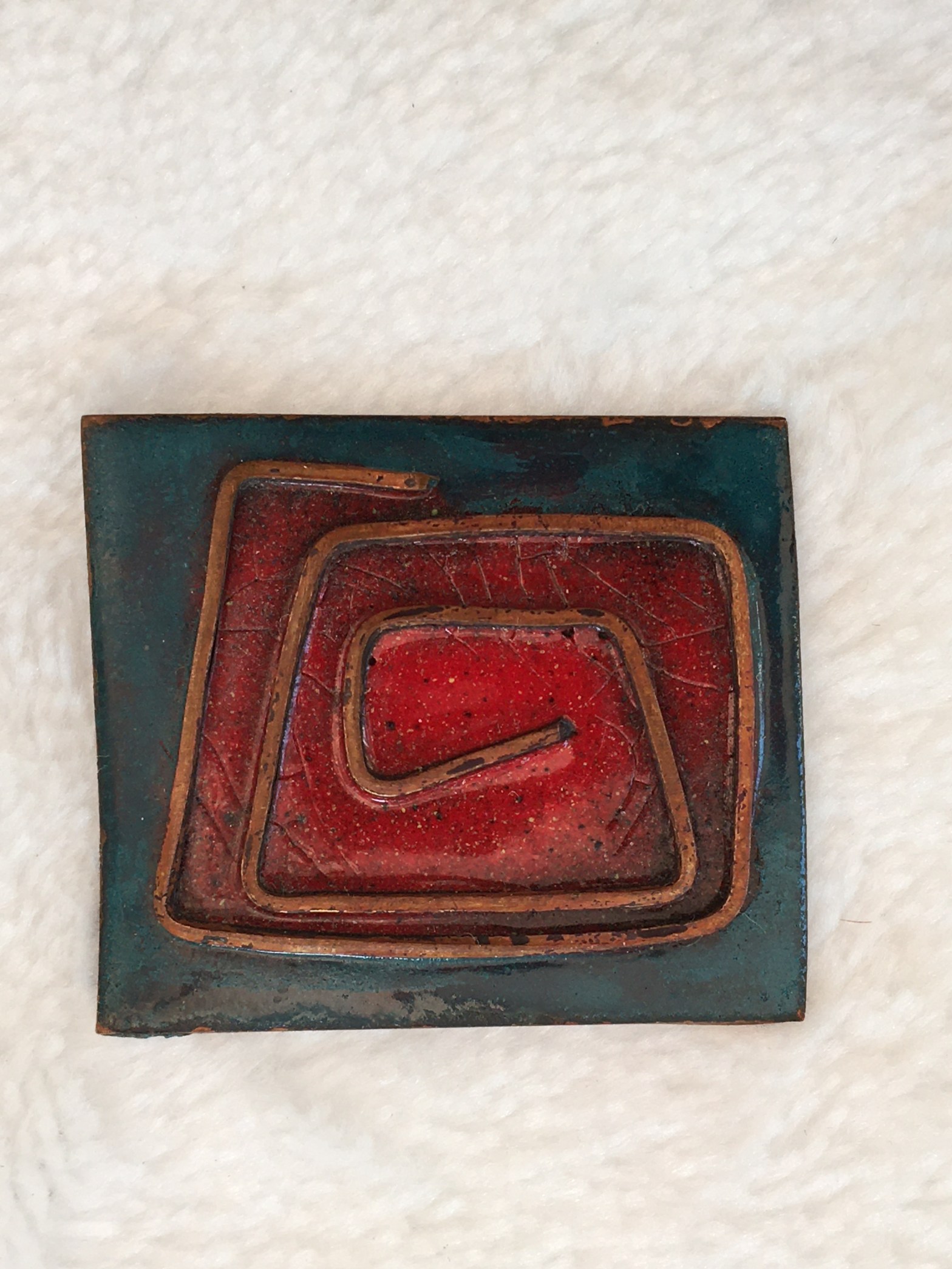
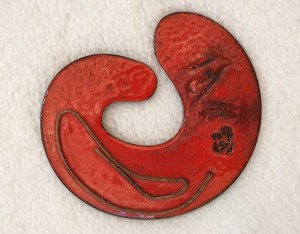
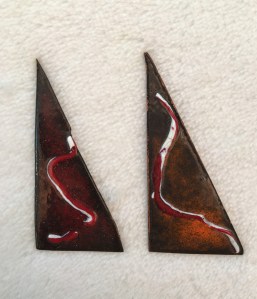
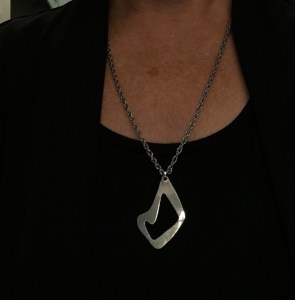
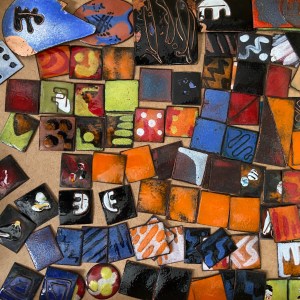
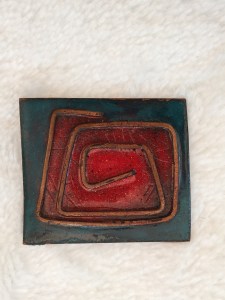
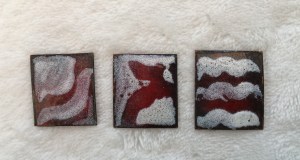
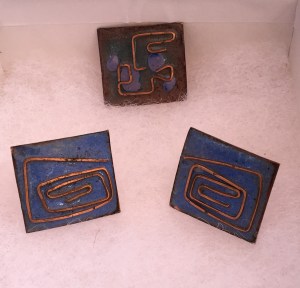
At this time, Inez began exploring with copper and silver jewelry making, and she incorporated concepts of abstract expressionism into her designs. You’ll notice she also retained the idea from her earlier work in greeting cardmaking, with embedding metal wires in some of the designs.
Most of her jewelry pieces were earrings, pins, necklacesand scarf clips
Inez’s earrings were exclusively clip-on’s. During the 19th and early 20th century, the idea of piercing ears and having holes in them was considered vulgar. The invention of clip on earrings in the 20th century allowed all women the opportunity to wear earrings. By the 1950’s, clip-ons were in high demand with styles available for every occasion. Pierced earrings came into fashion by the 1970’s.
Pins were very fashionable at this time as well. Often times, she created matching sets of earrings and pins.
As a child, Inez had learned to sew and in fact had made some of her own clothing.
During the late 1940’s, Inez spent a year working as a seamstress for a professional theater. As such, she quickly learned all the ins and outs of true garment construction.
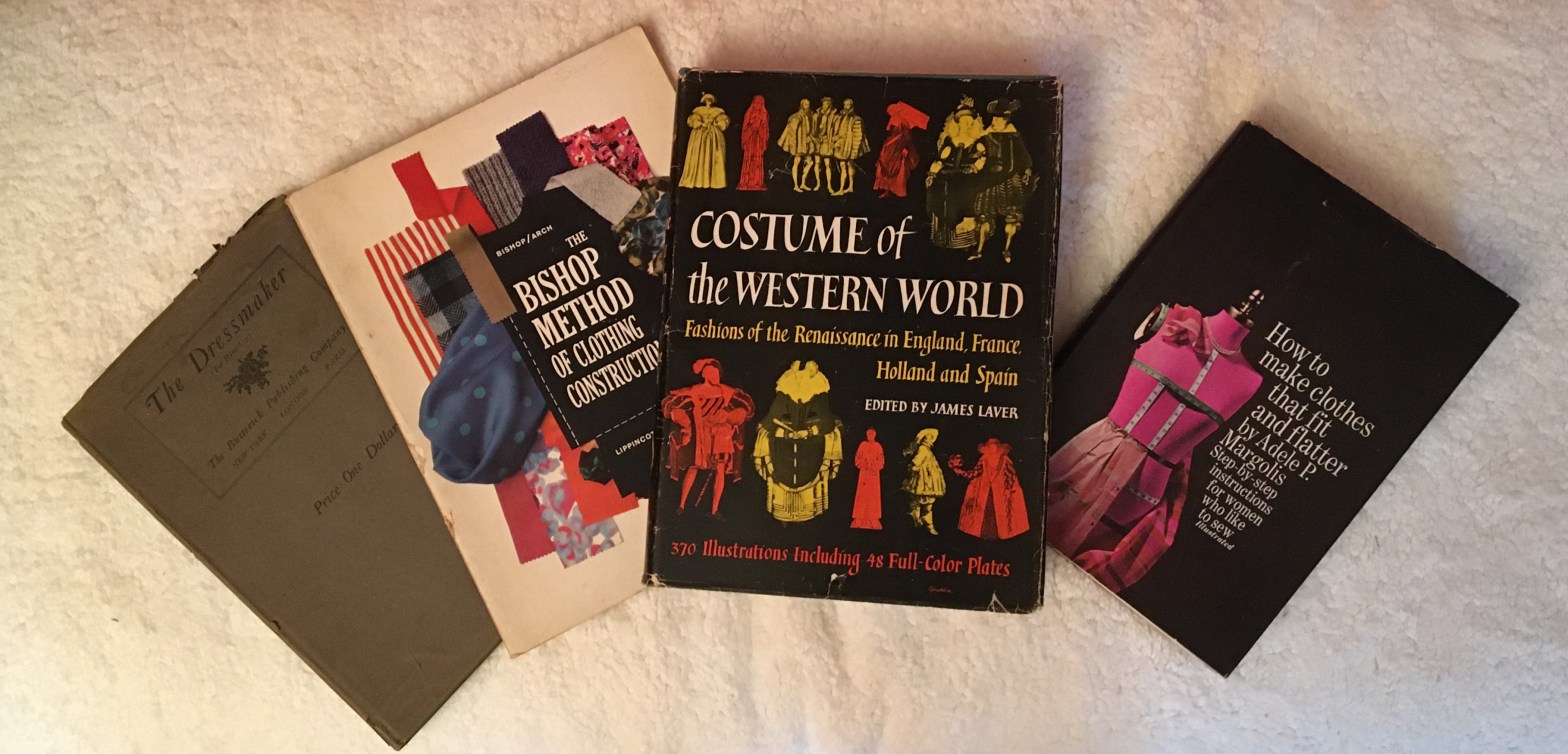
Crash Course Materials
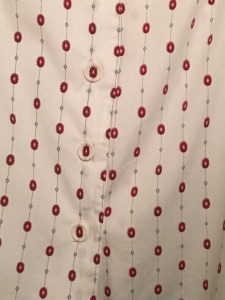
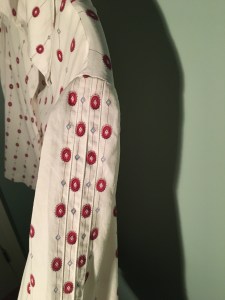
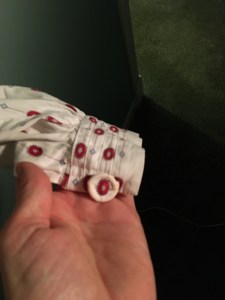
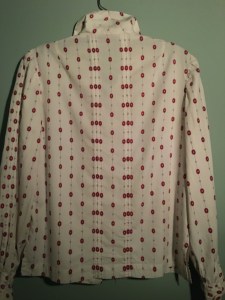
If you look past my poor ironing and photography skills, you will see below an example of her fine garment craftsmanship in a blouse from the late 1940’s. Note the perfectly lined-up seams and covered buttons in matching fabric. Each button down the front is perfectly lined up such that they blend into the pattern of the fabric.
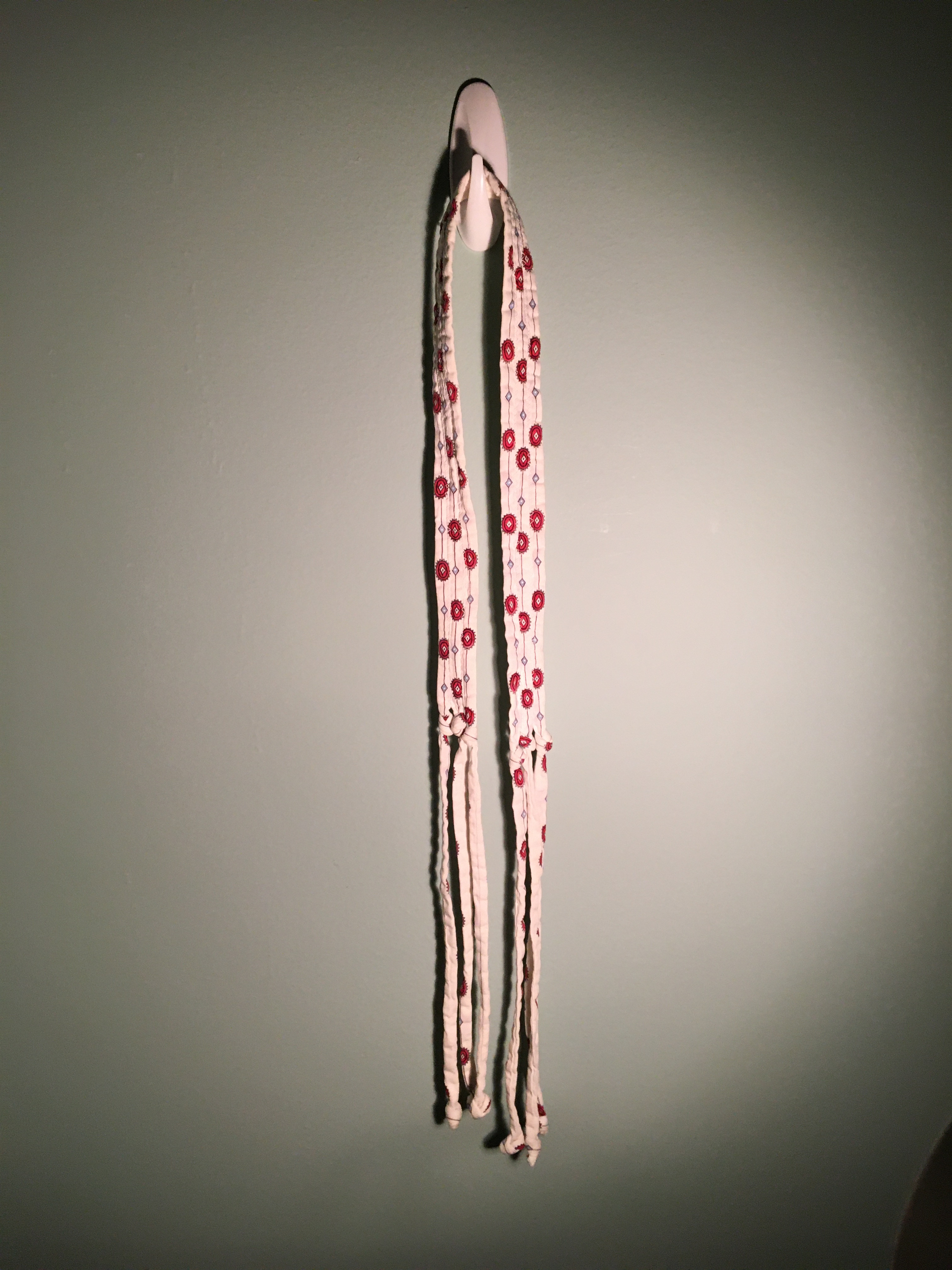
Can you see the buttons running down the front?Detail. Each button is hand covered with fabric to perfectionEach sleeve is constructed with detail – three strips of the fabric pattern aligned and sewn, running the length of the sleeveCulminating in the matching cuff, again with the matching three strip of patterned fabric.And matches the two three-strips running down the back of the blouse
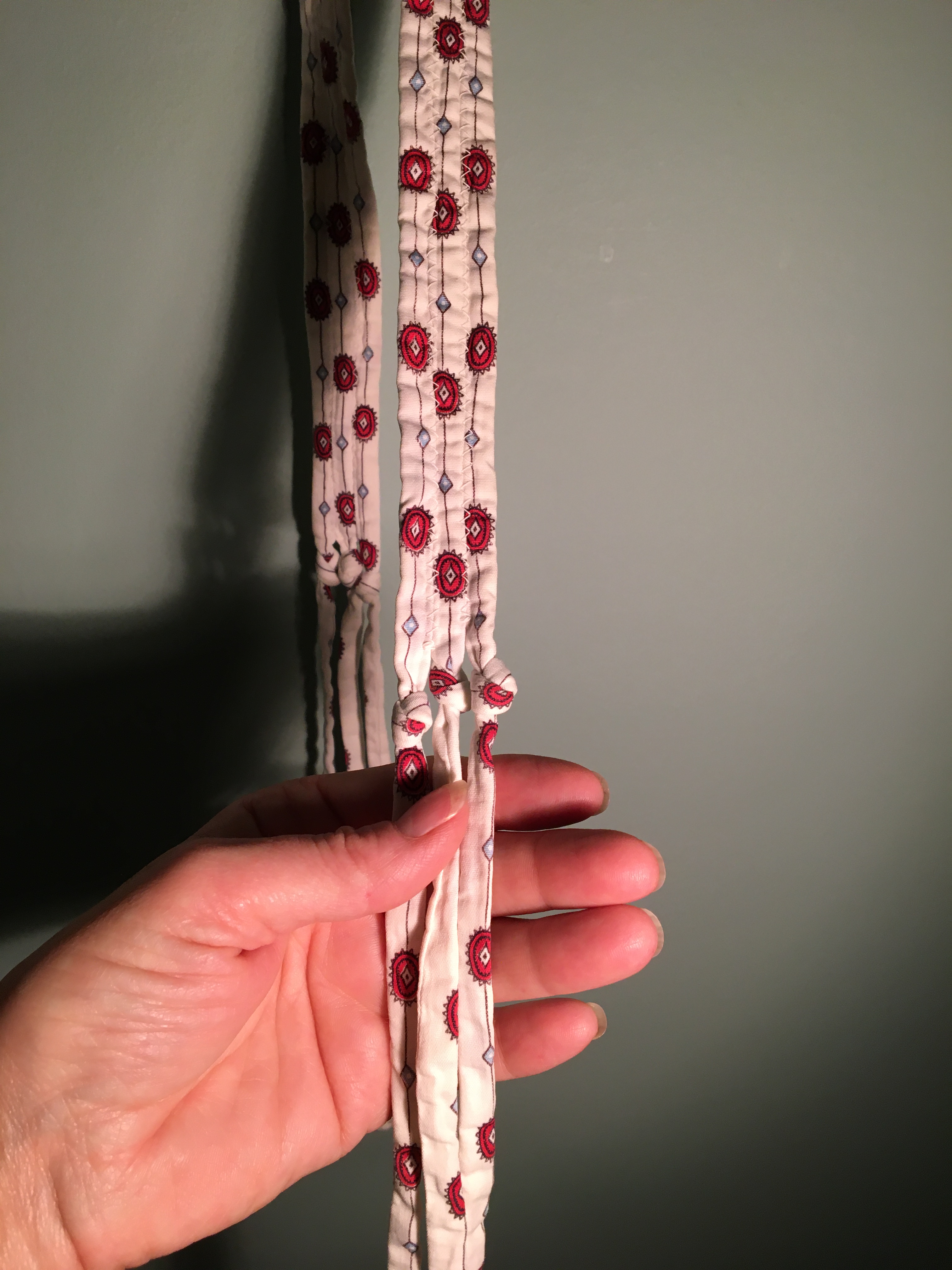
And lastly, she carries the three-strip pattern through to the matching headband.
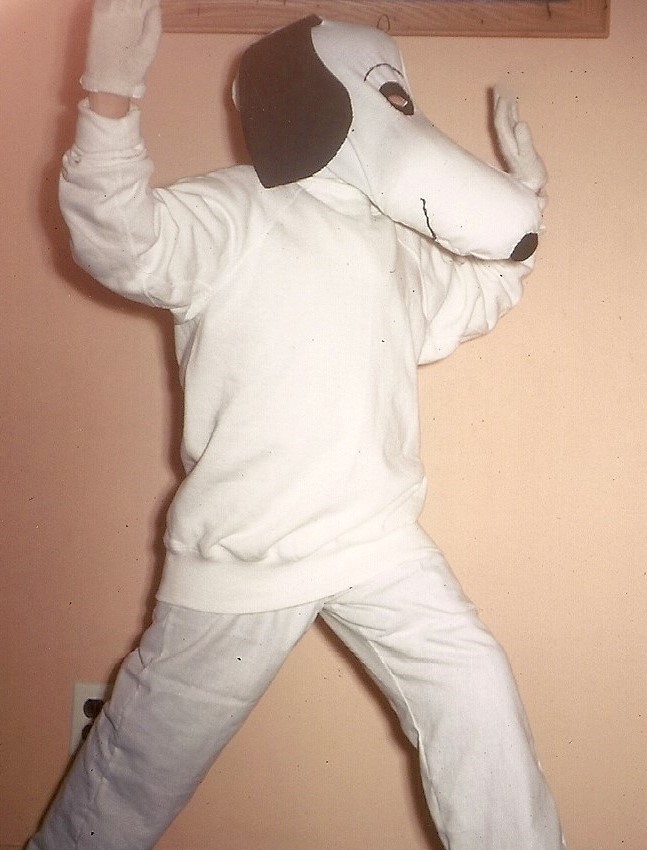
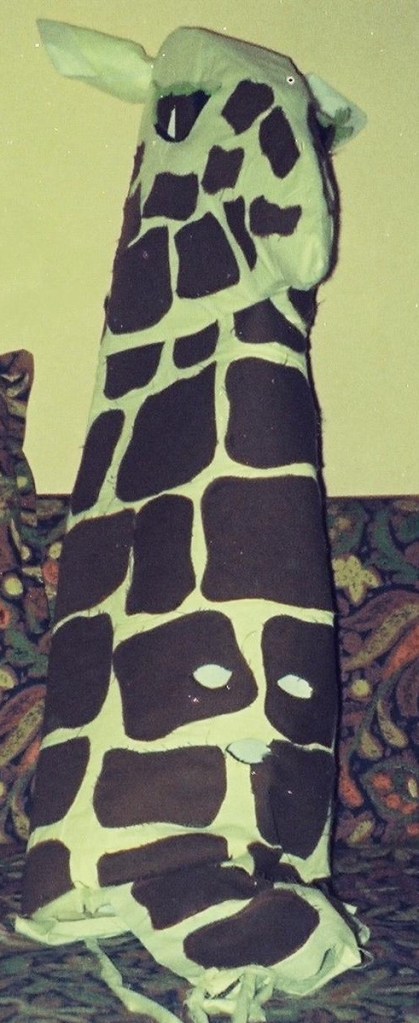
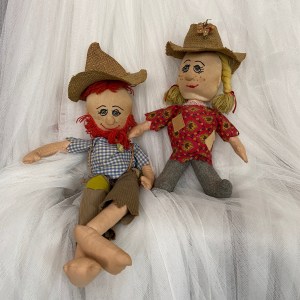
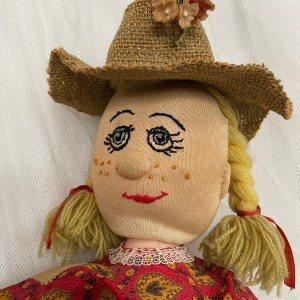
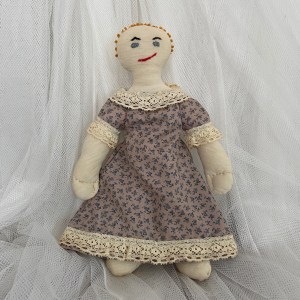
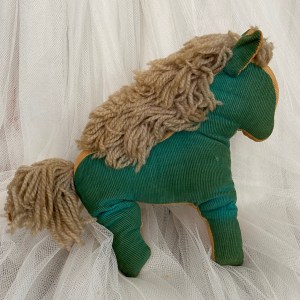
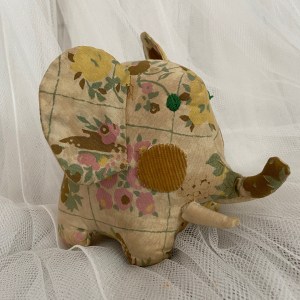
During her time working with the theater she developed her sewing skills, as well as creativity and attention to detail. Inez designed & sewed garments and other things throughout the rest of her life. Some of her most playful designs were children’s clothing, doll clothes, toys, and halloween costumes, such as a fire breathing dragon and a giraffe.
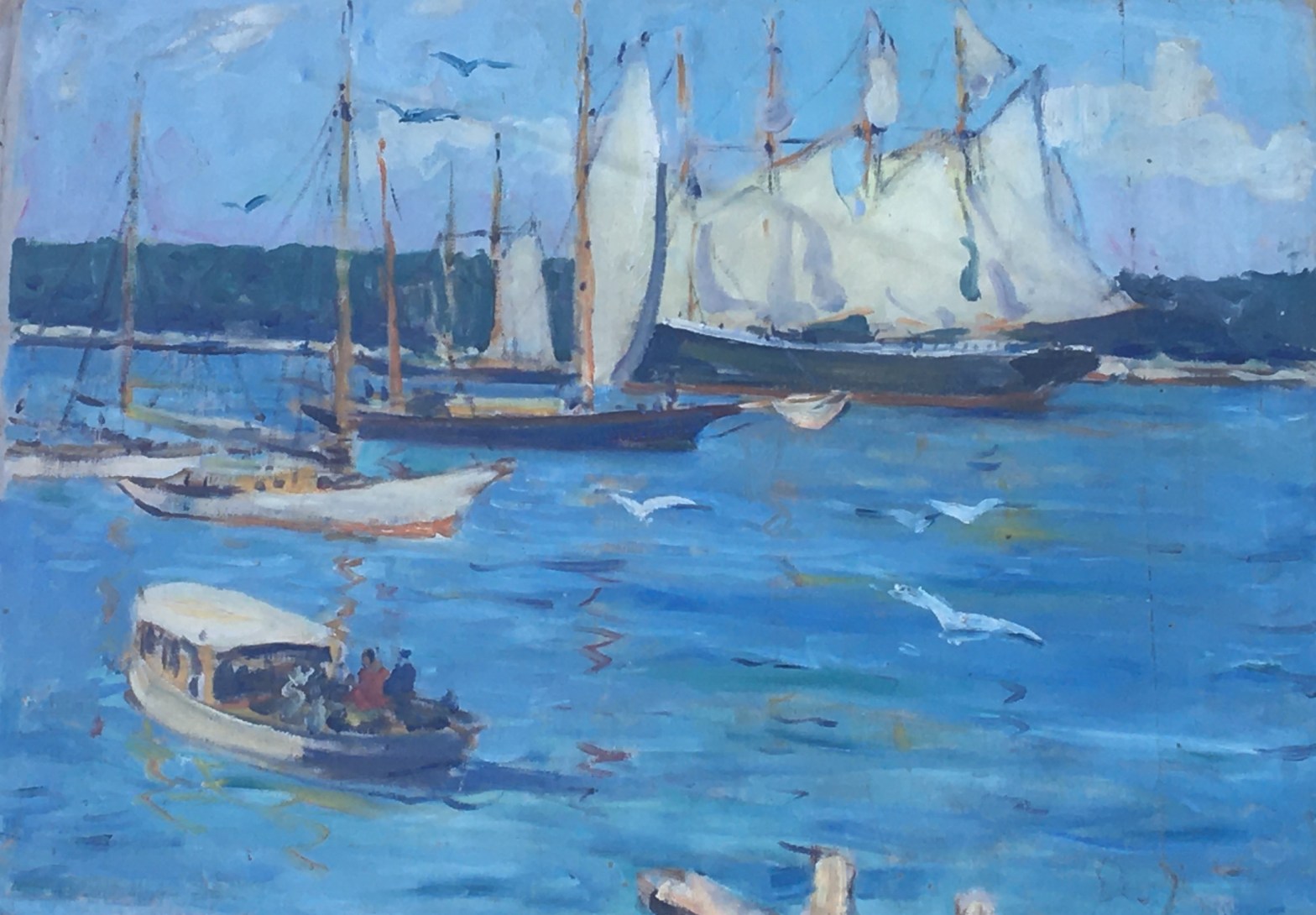
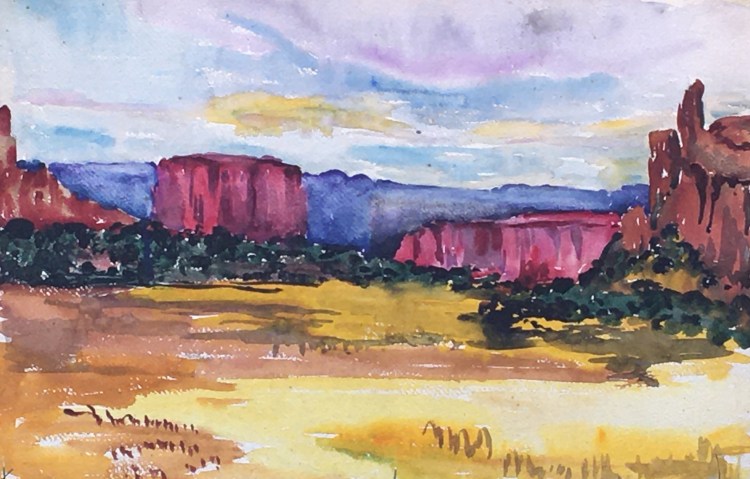
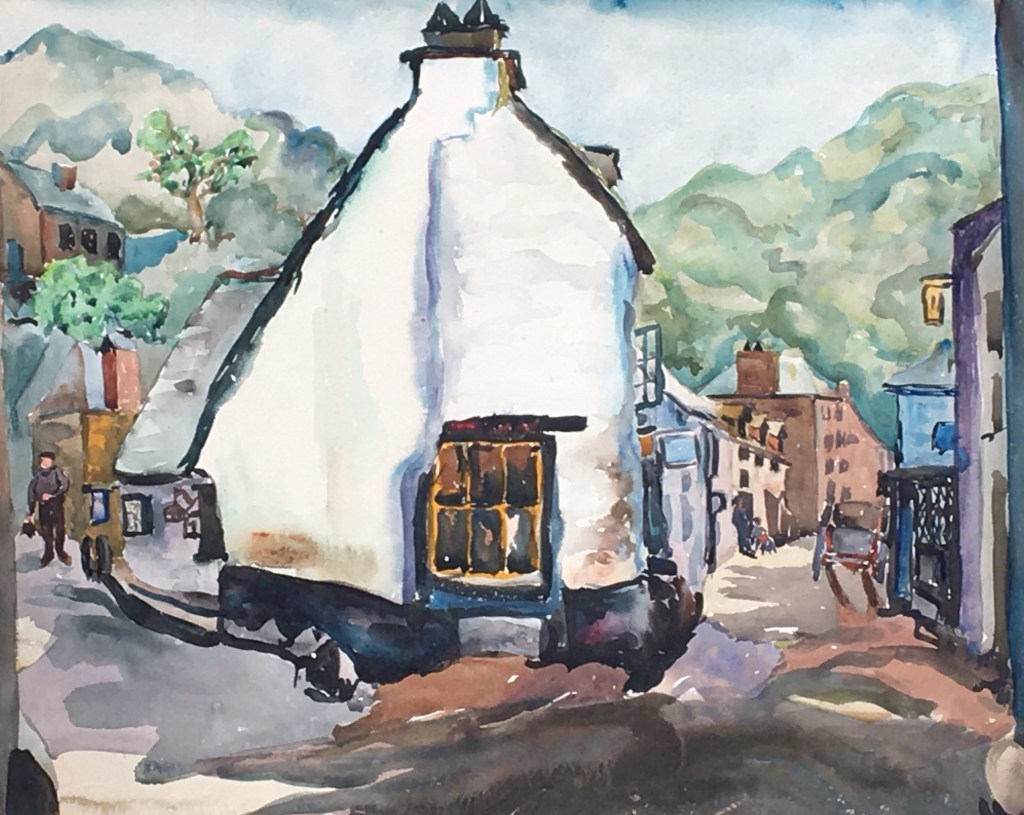
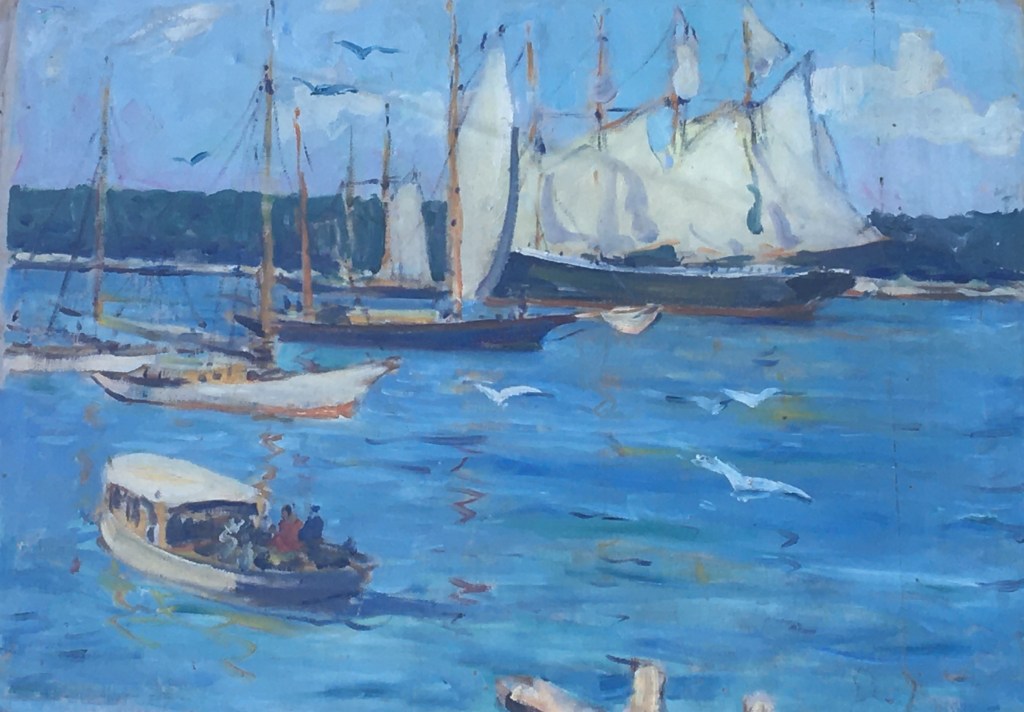
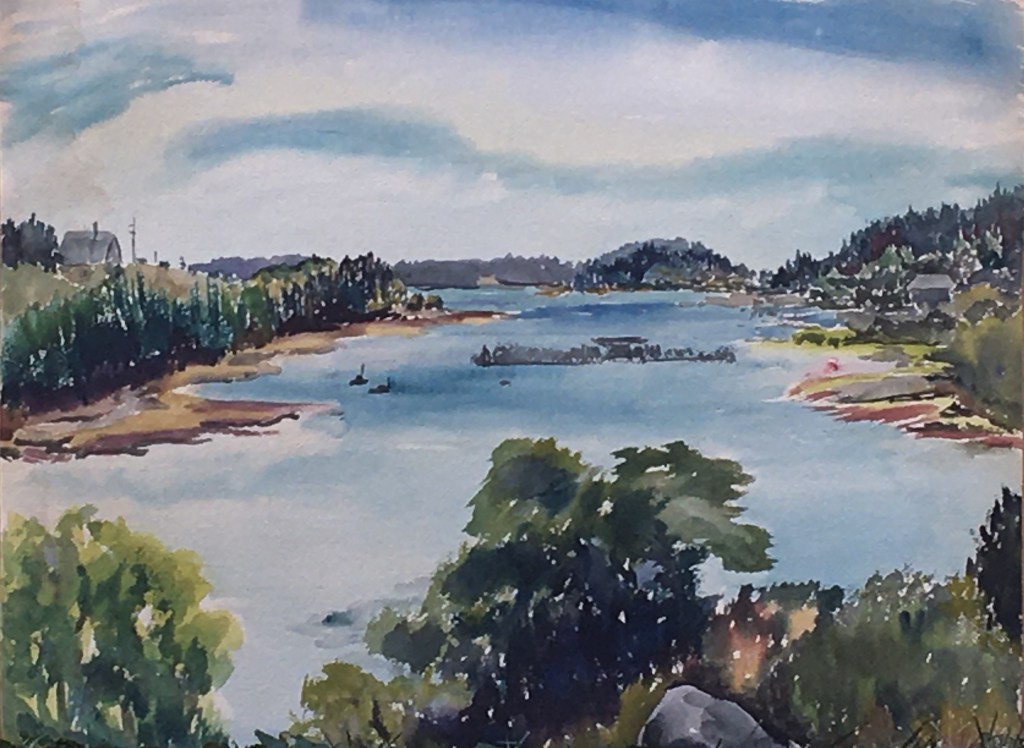
Carrie E. Clute was a professional artist, specializing in painting. She also was Inez’s paternal aunt. For Inez, art was around her from childhood, and you can see the influence of Carrie’s work in some of Inez’s latter work. In a subsequent blog post I will share comparisons of a couple of their works, but in this post I will provide a bit about this amazing artist and her work.
Carrie was born in 1891 and lived until 1968. She never married and supported herself with sales of her paintings, as well as, working as a high school art teacher in NYC. Carrie spent a great deal of time living on the coast of Maine and in Florida; and, she traveled extensively across the US, as well as on a steamship across the Atlantic to Europe in 1929.
The subjects of her painting were primarily landscapes, seascapes and the natural world. Her work was strongly influenced by the post impressionism movement.
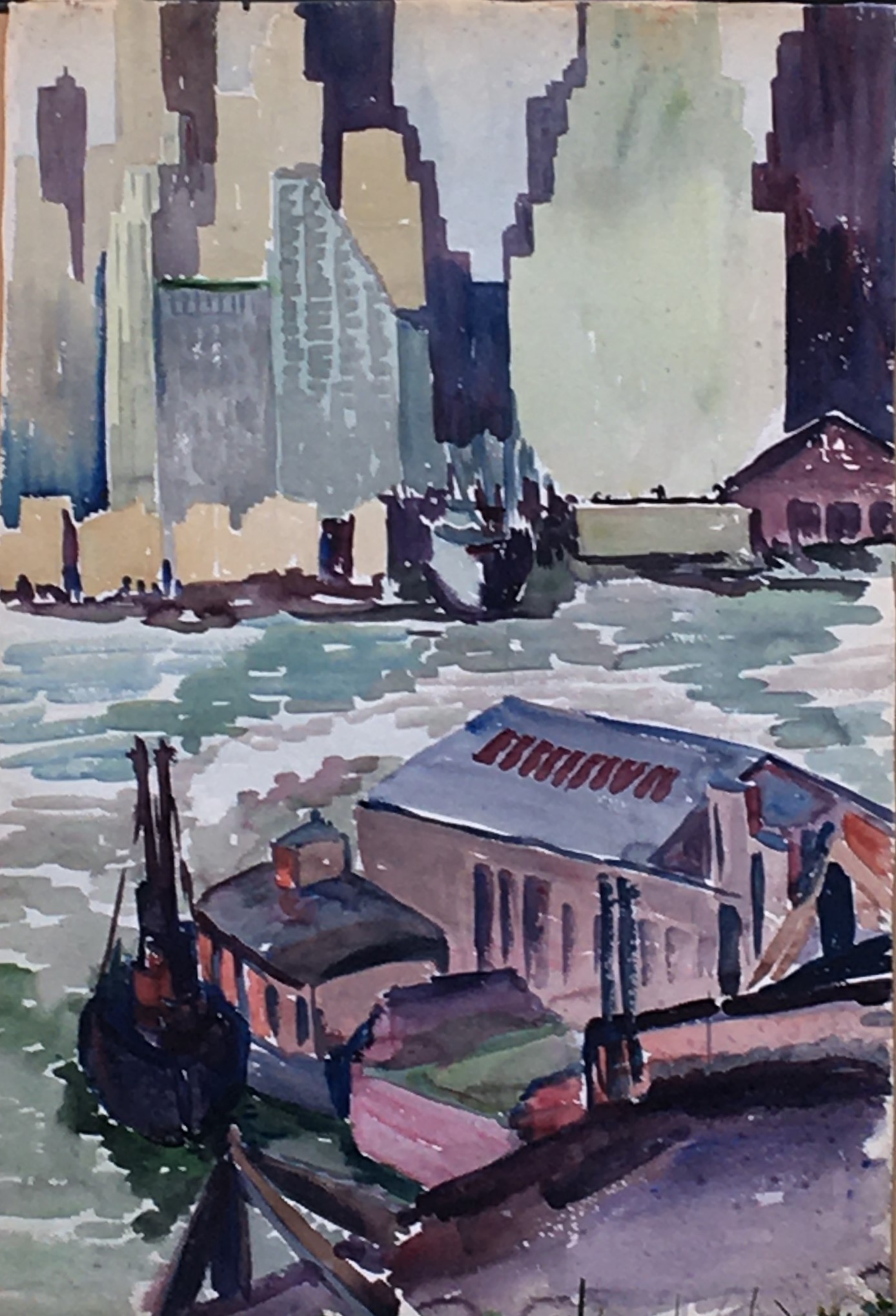
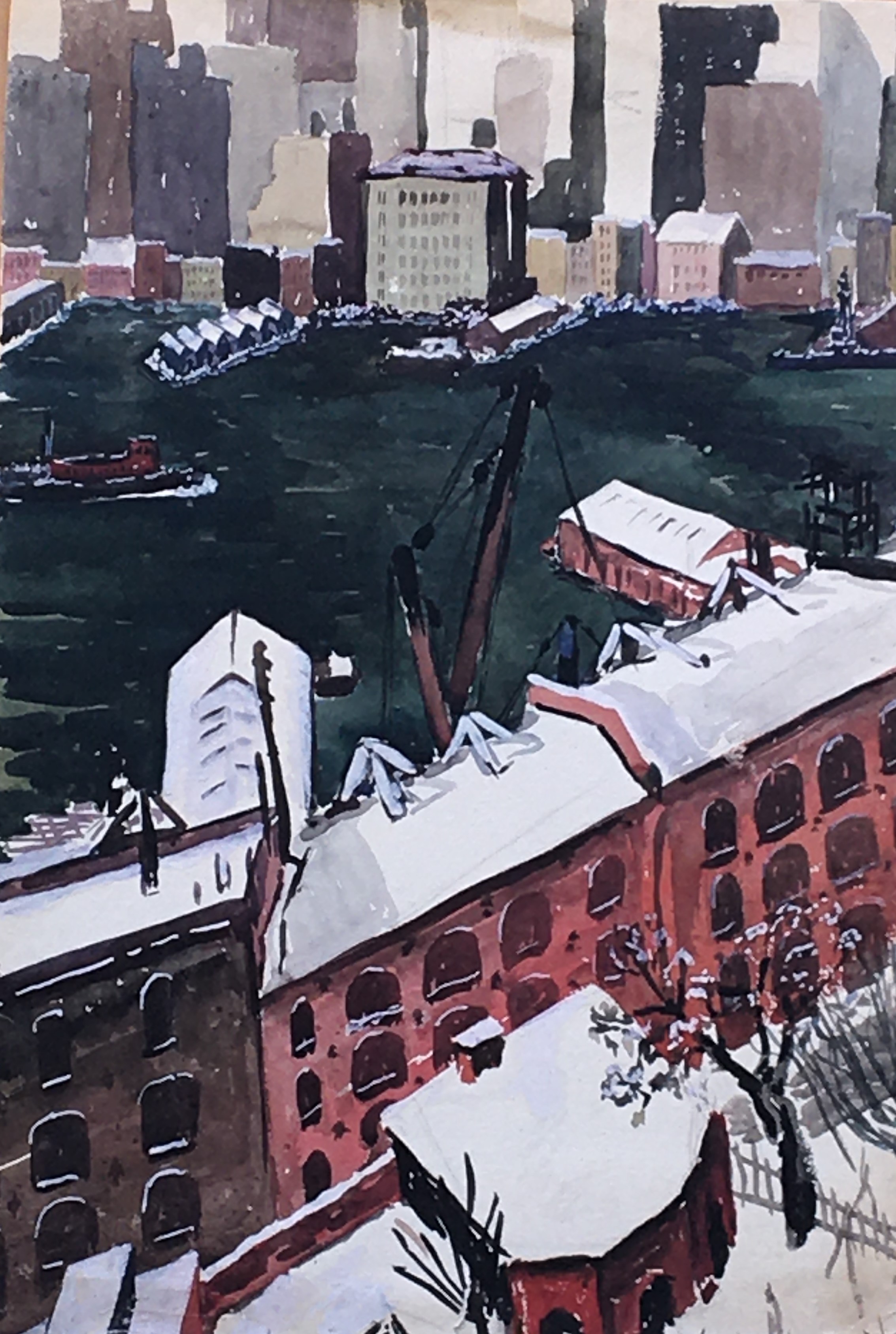
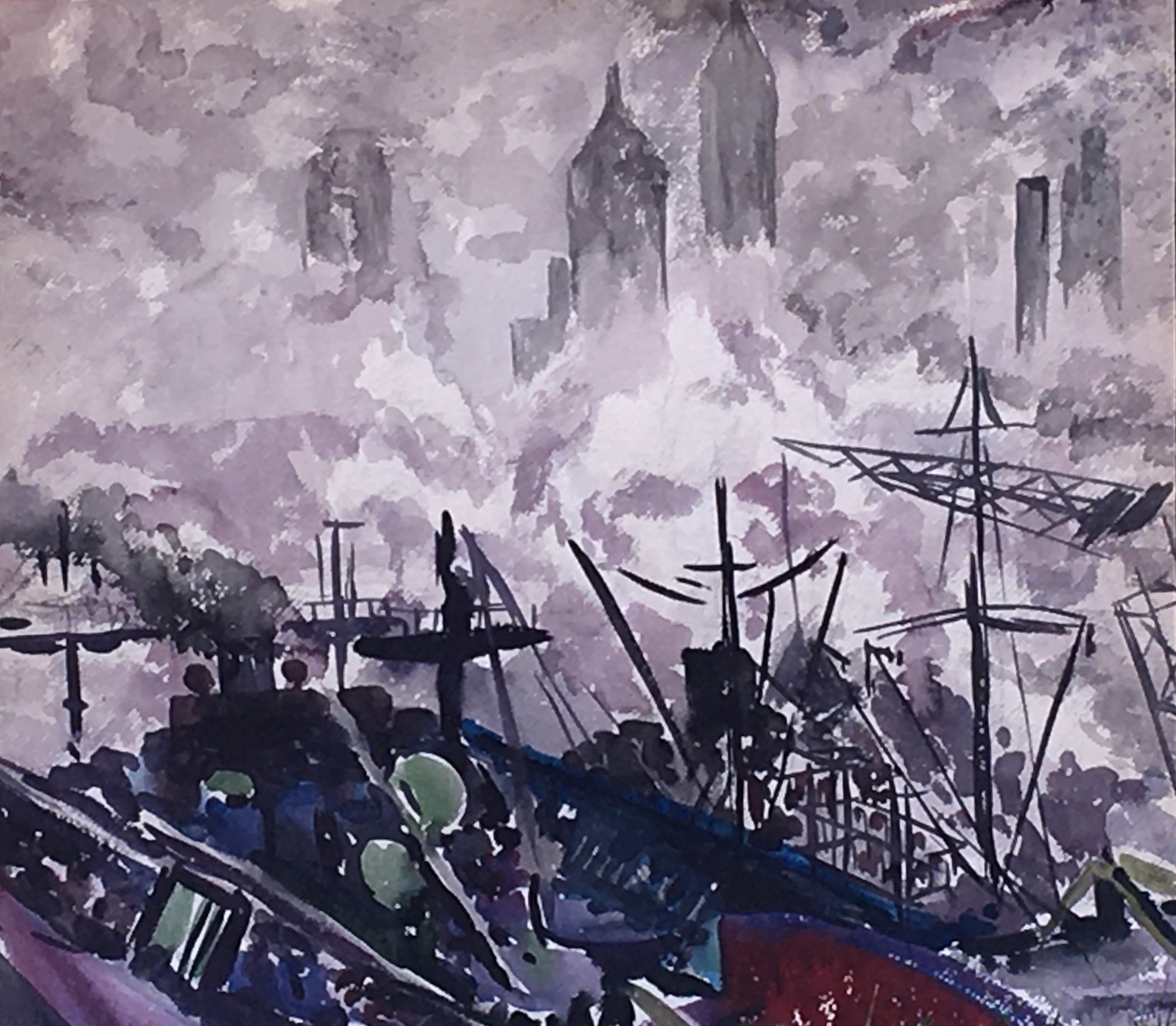
Even while living in New York City Carrie was looking for and painting nature. As an example, while living in Brooklyn, she painted the East River with Manhattan in the background.
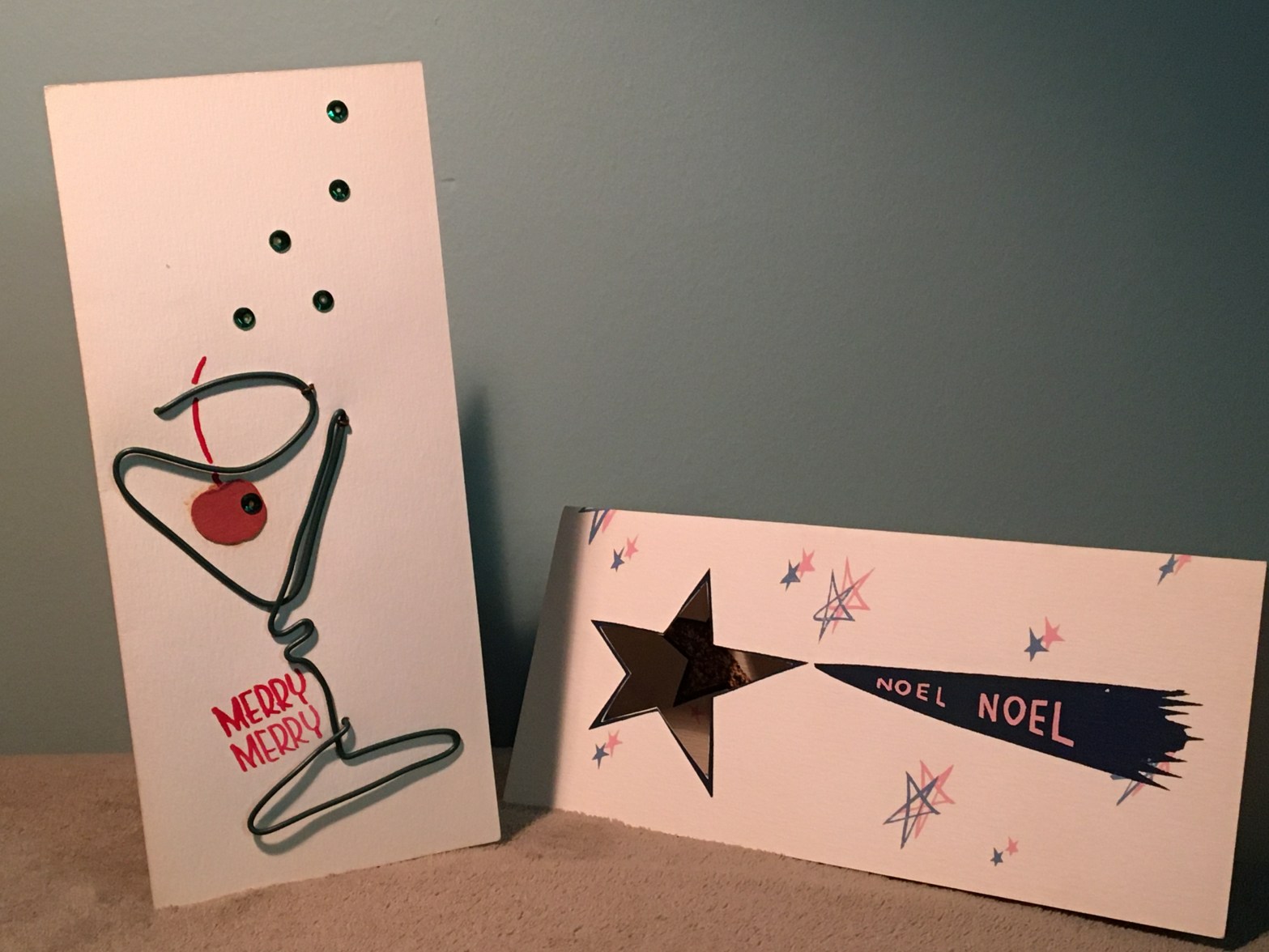
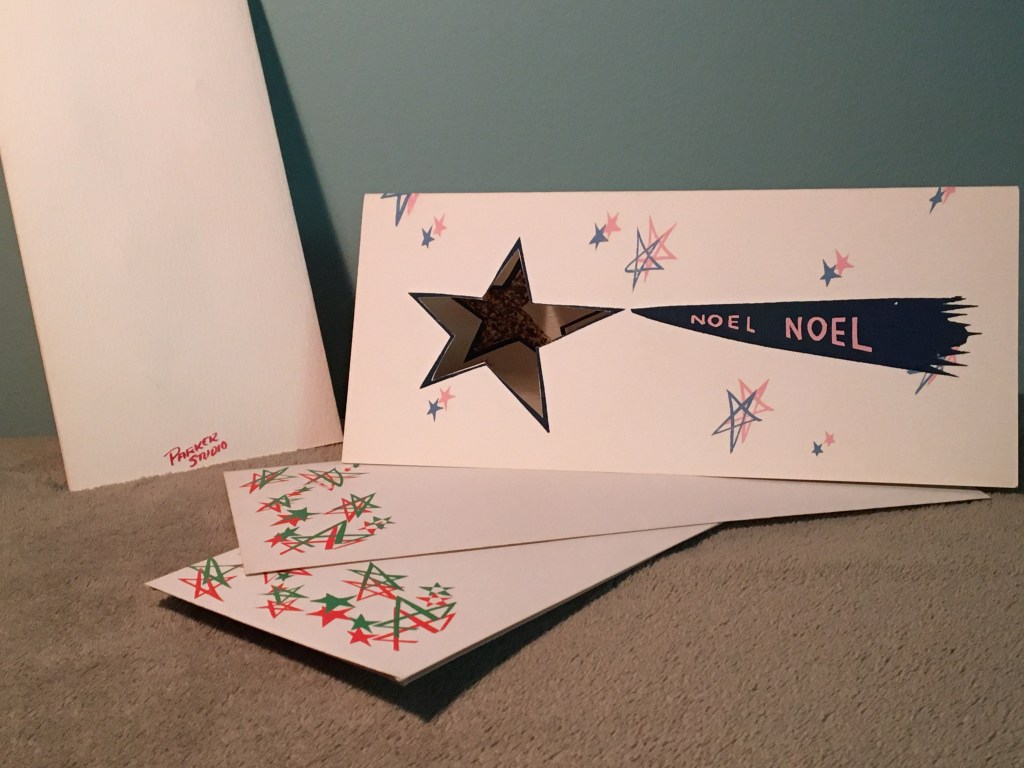
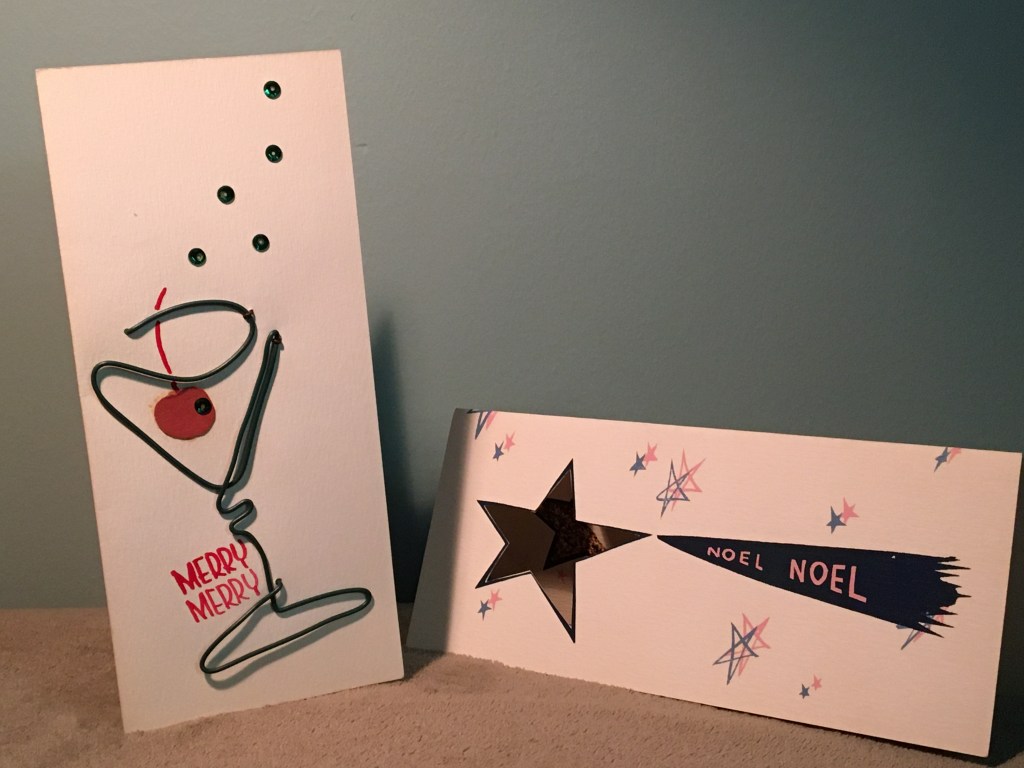
In the late 1940’s, Inez moved back to Manhattan. She worked in an advertising firm, as well as started her own greeting card business. At the time, she was known as Inez Parker, and her company was “Parker Studios”. Her entrepreneurial spirit would be tapped again later in her career, with both a mail order business and when she opened her own art and consignment shop,Imagination Plus, in the late 1970’s.
Late 1940’s Office Holiday Luncheon. Inez is standing on the far left
Why am I so passionate about people preserving their life stories for the future?
Since the mid 1990’s I’ve been fascinated by genealogy. As a librarian, I love the thrill of the hunt and finding one more detail or clue about an ancestor. More than that, I love identifying with my past, considering what it was like when my ancestors lived, and how I am connected to those people.
With genealogy, we trace names, dates of birth, marriage, and death, as well as names of spouses and children. If we are lucky, we can also find out bits about their life, such as occupation, cause of death, whether they had run-ins with the law, whether they served in the military — life events that might be found in church records, vital statistics, court documents, census records or family bibles. Every little thing we uncover is a great aHa!
While all of this is wonderful and exciting, it still leaves these people from the past as feeling distant from us today. We are left without knowing who these people really were and what they believed. What was their life like? How did they become the people who they were? What gifts and abilities did they have that have come down through the line of generations to me?
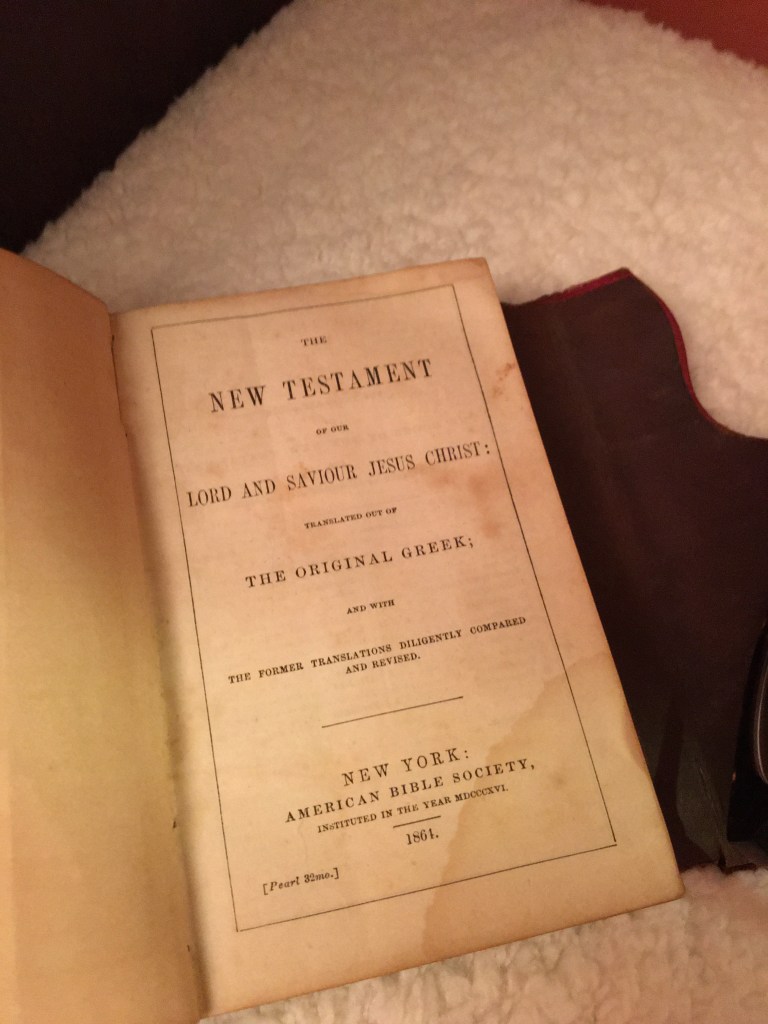
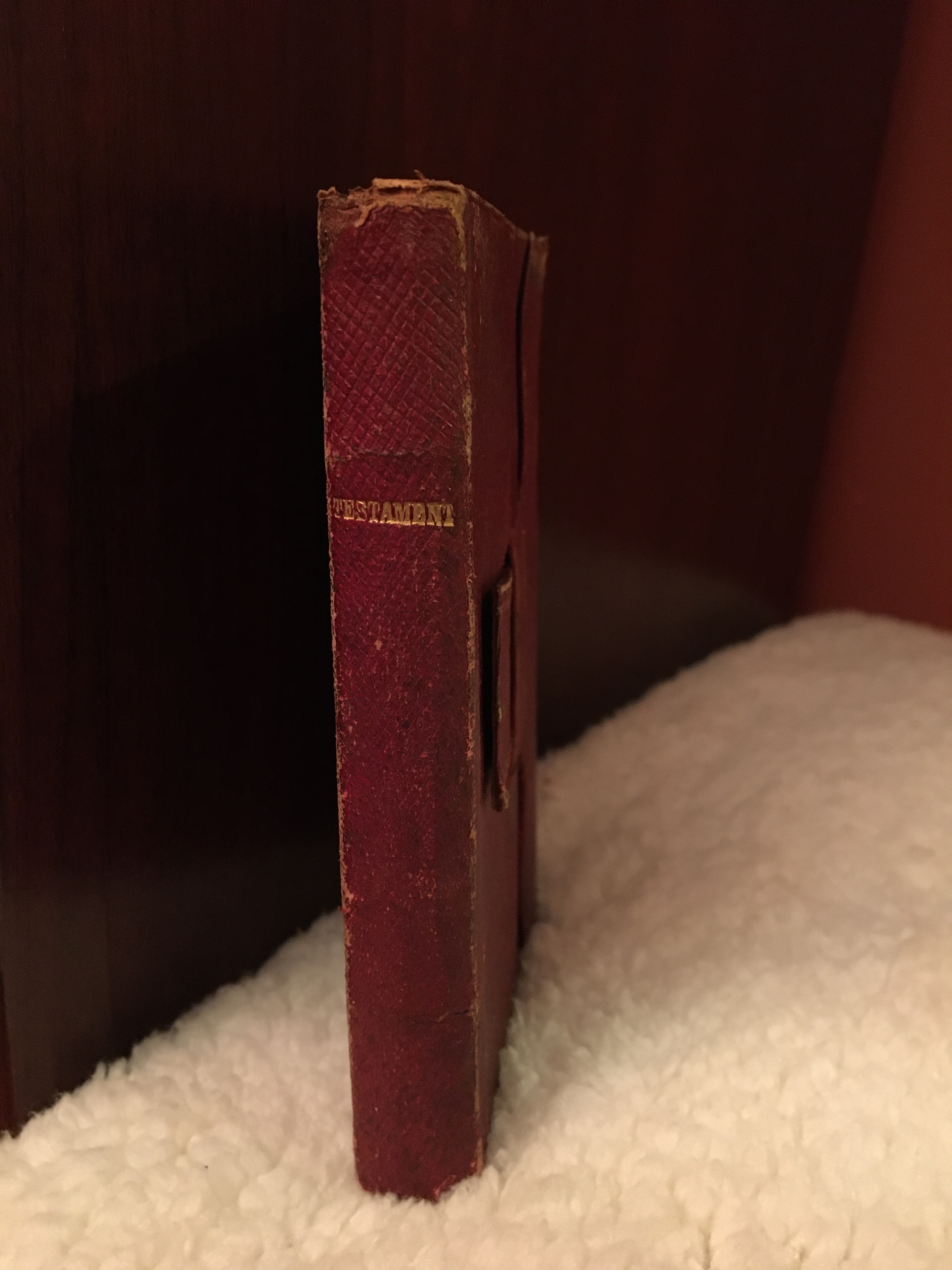
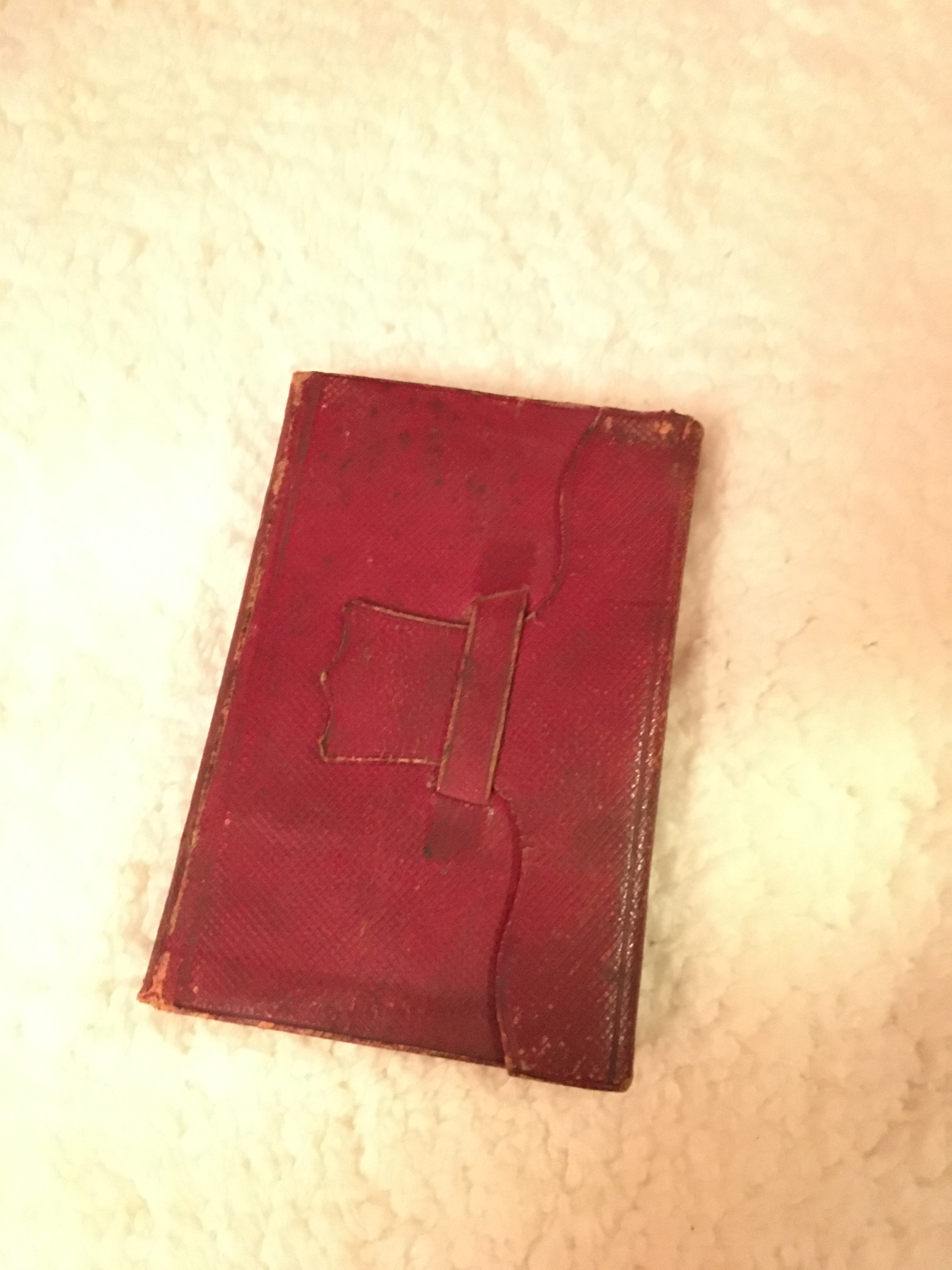
About 20 years ago I was looking at some of the old books I inherited from my family home. One book in particular affected me greatly and changed my perspective on genealogy and, more importantly, personal history. It is a small, leatherbound book, just 3″ x 4 1/2″, It is the New Testament from 1864, published by the American Bible Association. It’s a lovely little book with gilt edging.
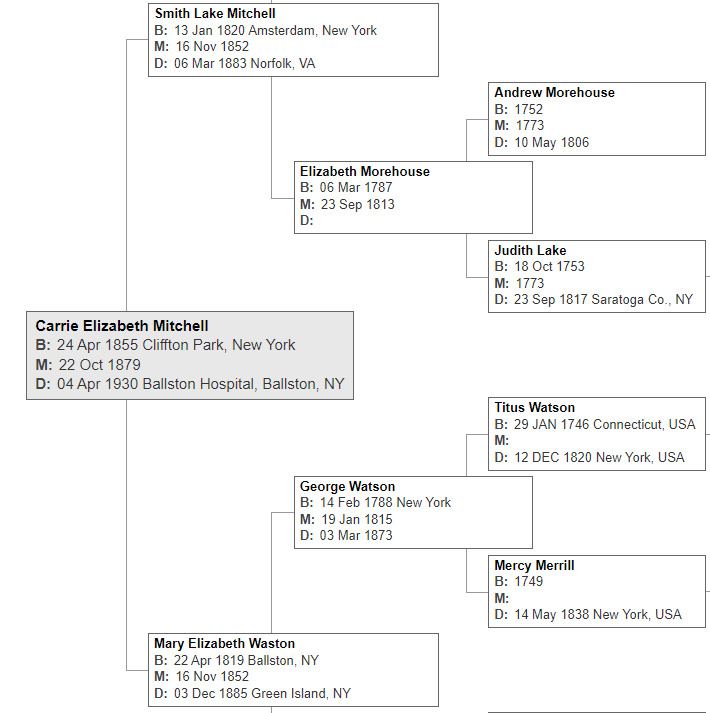
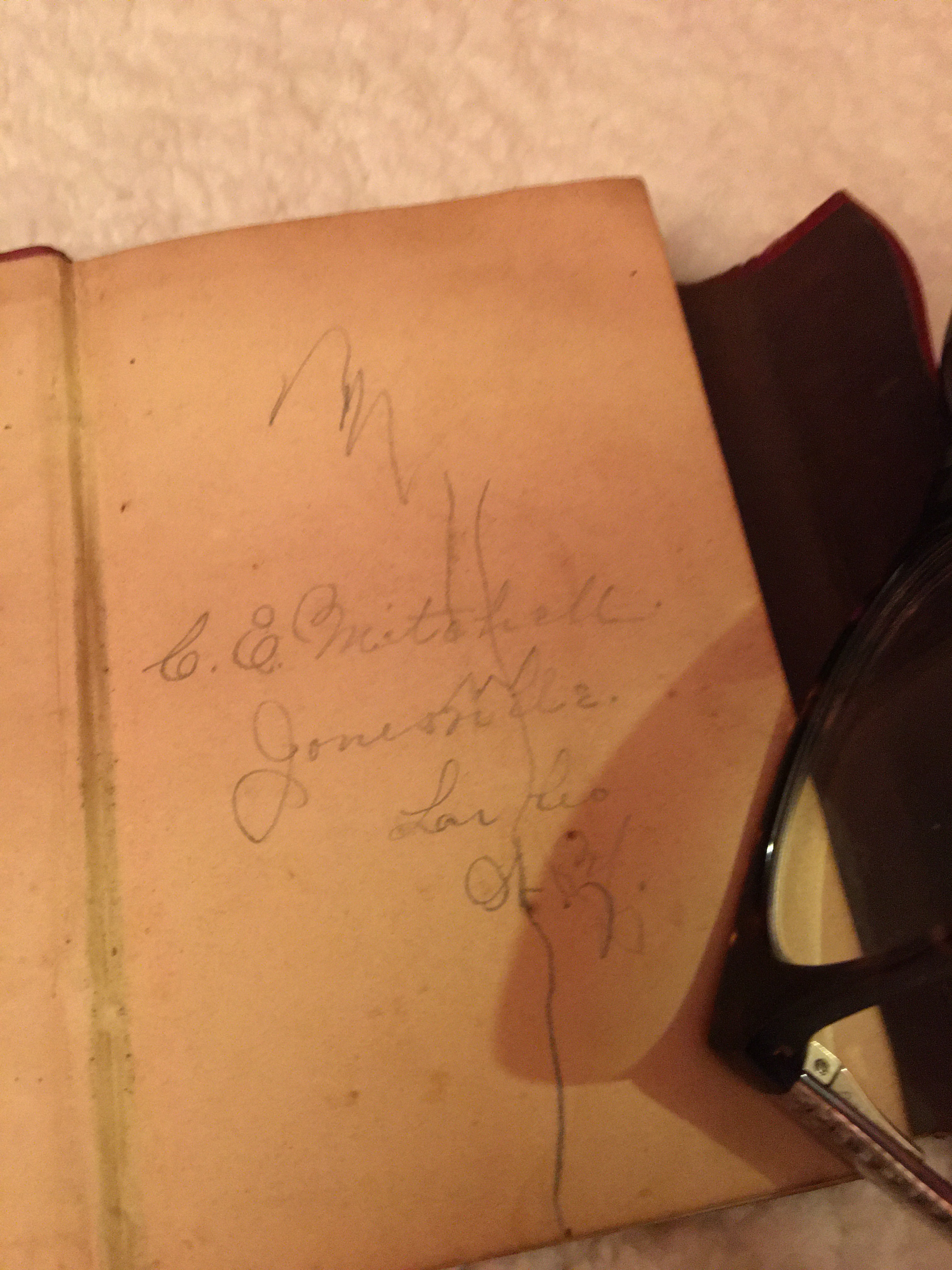
On the inside cover the owner of the book wrote her name and location: C.E. MitchellJonesville, Saratoga Co, N.Y. This book belonged to my great grandmother before she was married, as she used her maiden name.
Carrie Elizabeth Mitchell was born in Clifton Park, N.Y. in 1855 and lived her entire life between Saratoga and Schenectady counties of upstate N.Y. Carrie would have been 11 years old when this little book was published. Having died in 1930, she was long dead by the time I was born.
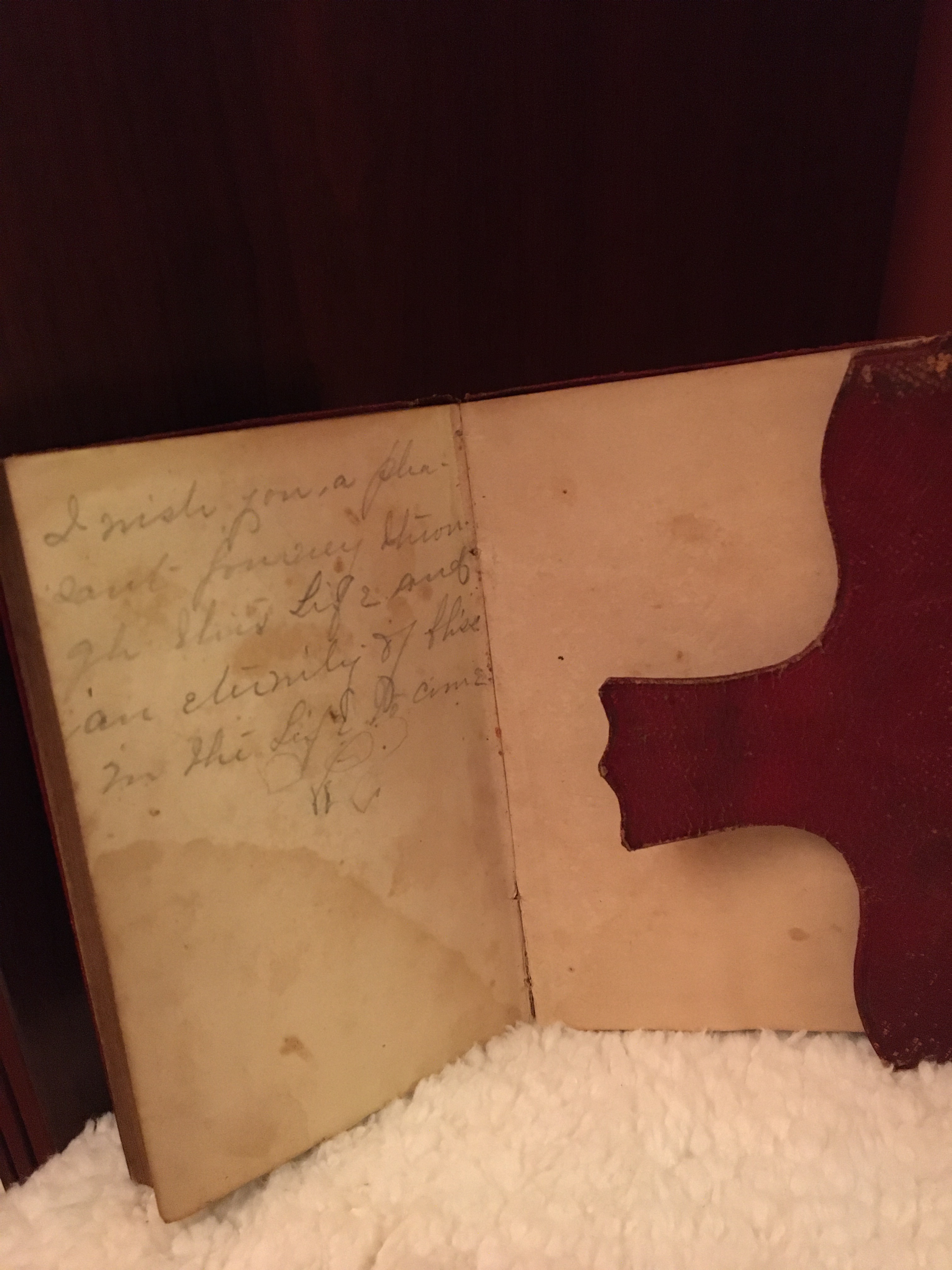
Upon examining the book further, I discovered in the very back a wonderful sentence also hand written by Carrie: “I wish you a pleasant journey through this life and an eternity of bliss in the Life to come”. This touched me deeply. This was the first time in any of my genealogy research where an ancestor of mine spoke directly to me, an unknown but loved descendant of hers. She was thinking about me when she was alive. Wow! This blew my mind and quite honestly, this little book with her words to her descendants is one of the dearest possessions I have.
THIS is why I am so passionate about personal history. How I wish my ancestors could tell me more! I would love to know anything and everything about them, but their time and opportunity to tell me has come and gone.
I cannot know much more about my ancestors, but we are here now — we have the opportunity now to provide insights for the future generations. The time to do it is now. We can capture and share about our lives and our hopes & dreams for future the generations. We have the opportunity to provide them the joy of knowing a bit more than names and dates about us. Don’t miss your chance to give your descendants the amazing gift of you.
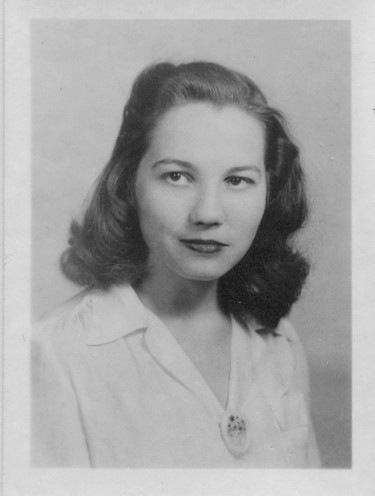
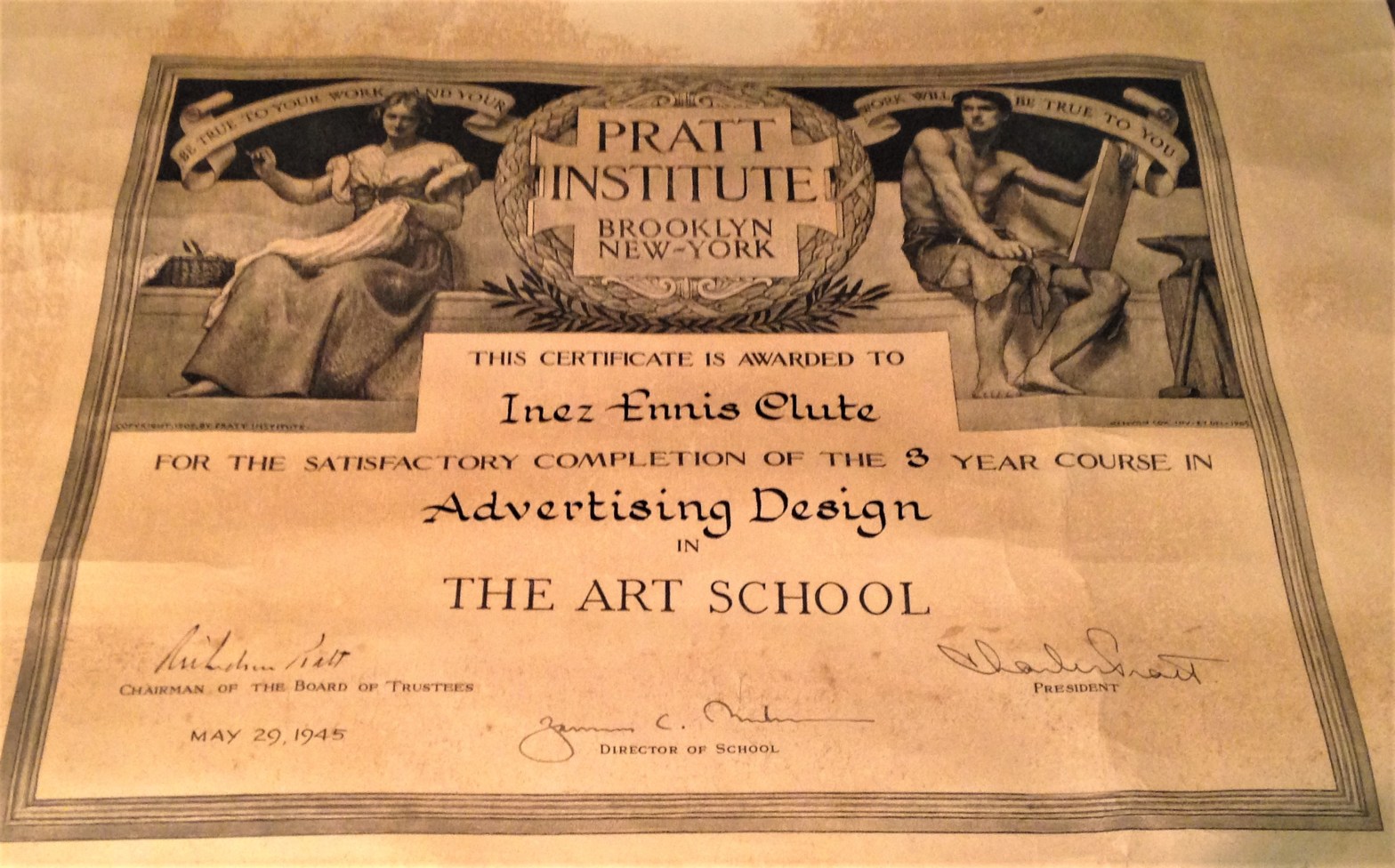
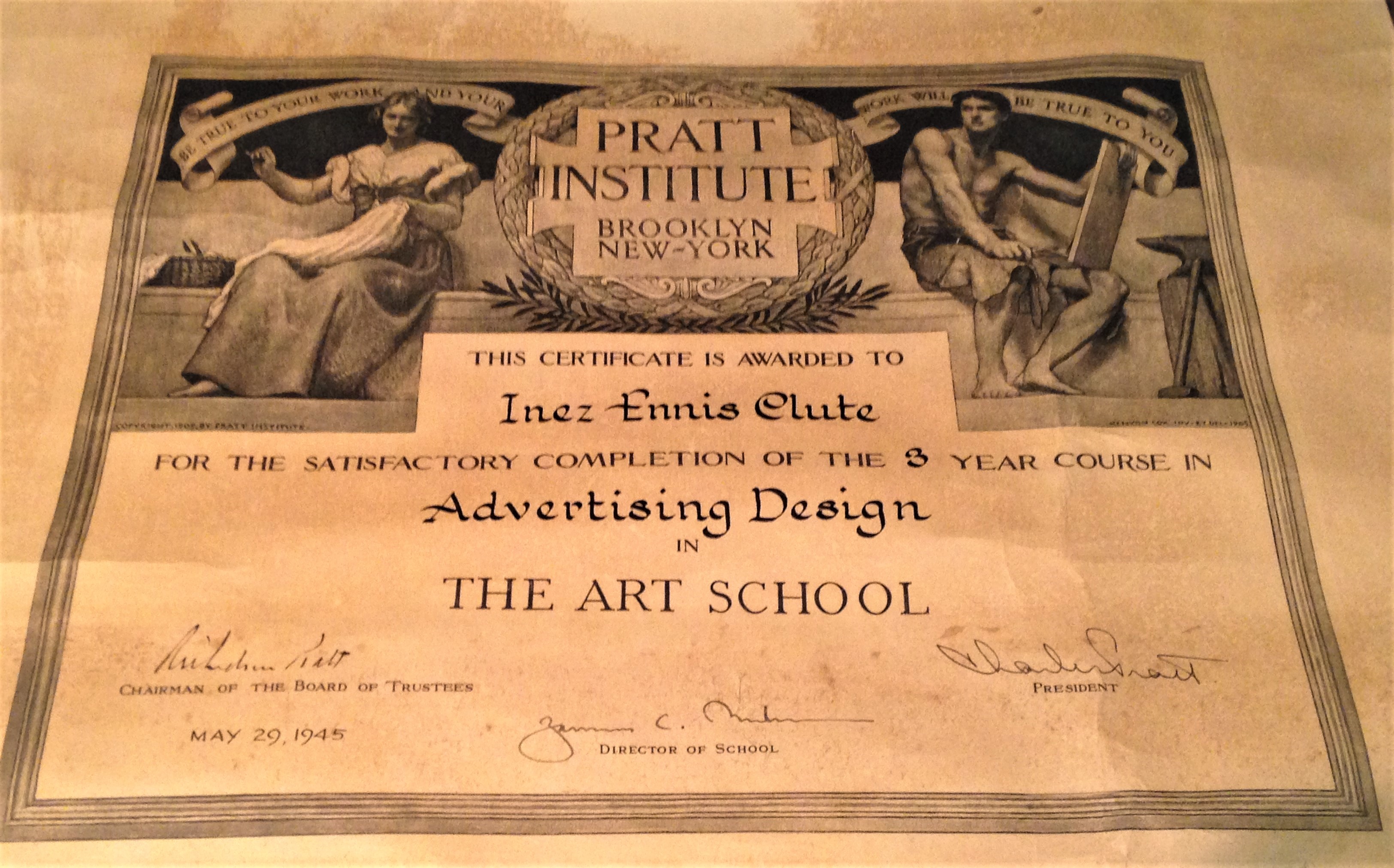
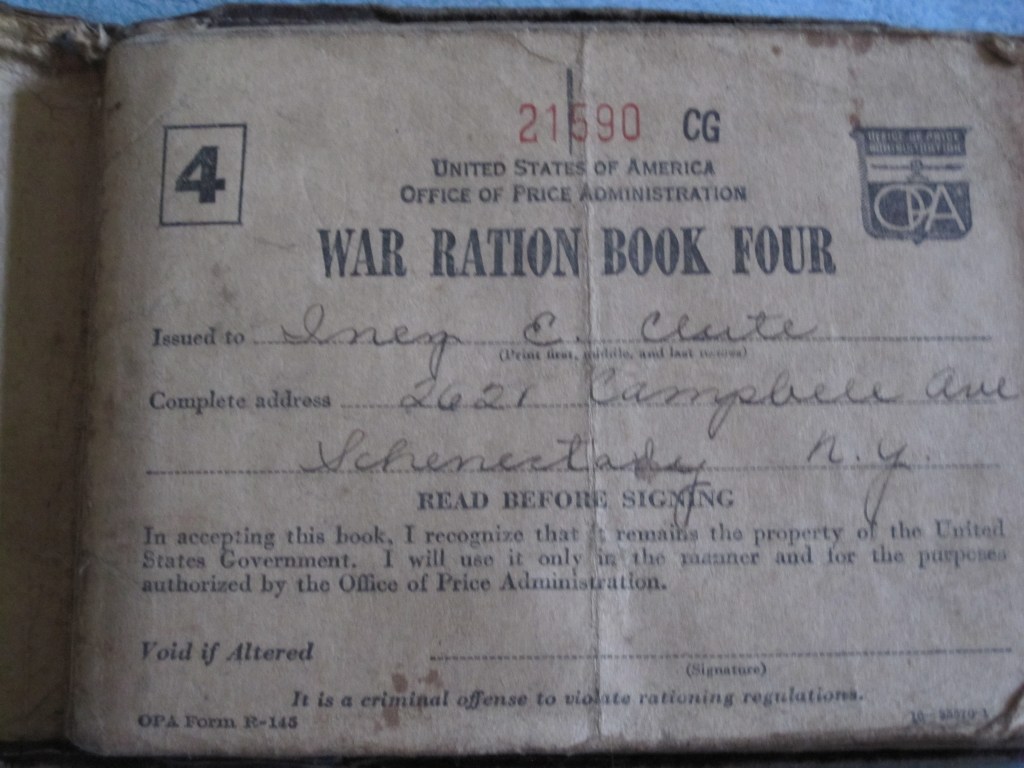
Inez attended the Pratt Institute of Art in Manhattan, NYC and earned her degree in Advertising Art. This was during World War II. She lived in an apartment in Manhattan with her friend, Barbara Adams, and they celebrated the end of the war at the ticker tape parade.
Her degree set her up for a wonderful career working in commercial art. She briefly worked in New York City, but shortly after graduation, her mother asked her to come home, so Inez moved back to Schenectady, NY for a few years.
One way to capture a personal history is to create a tribute blog. A tribute blog may be used for a whole life story or to capture a segment of one’s life. You can create a free blog with a product such as WordPress and as a digital medium, it can be saved for perpetuity. You can write stories, embed documents and photographs, and even insert audio or video clips.
Uniquely YourStory has created a sample tribute blog as an example for you: Inez C. Sewell – Artist Inspired by Nature. This tribute blog captures the artistic aspect of a 20th century woman’s life. Throughout her life, Inez was involved in the arts in many different ways, and each blog post captures a different aspect of her life and work as an artist. Throughout the upcoming year new posts will be added to share the story of this woman’s life through her art.
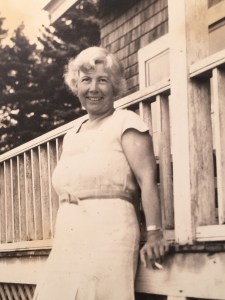
Inez C. Sewell
To see how the blog captures her art life story, follow the blog category “Inez C. Sewell – Artist Inspired by Nature” on this website.
Born in 1924, Inez grew up during the late 1920’s and through the Great Depression of the 1930’s. Her past times as a child were simple: reading, playing paper dolls and art.
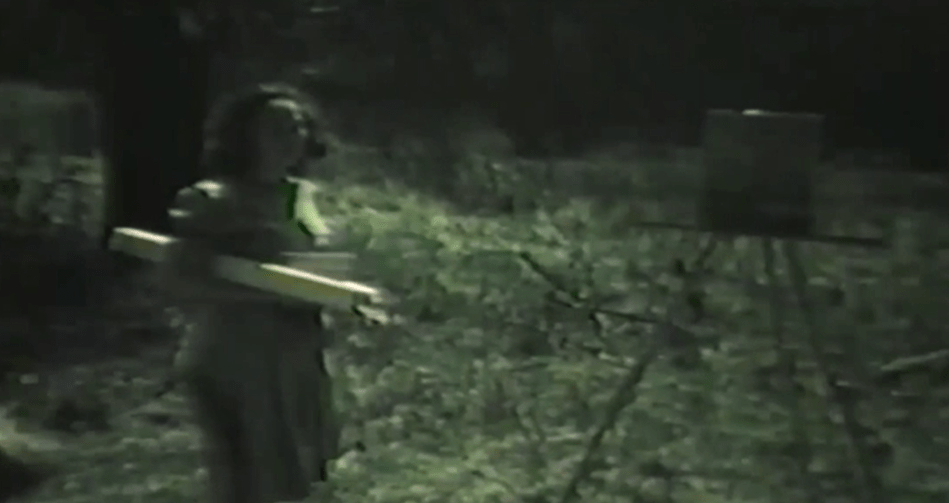
This short movie clip from 1939 is the first we see of her with her artwork – an expedition in nature with her teenage friends. A happy outing for the girls and a joyful day for Inez.
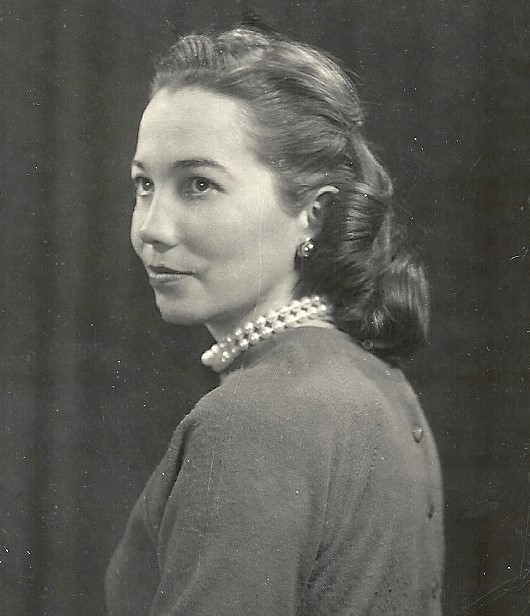
Inez was born in Schenectady, N.Y. in 1924, and grew up inspired by art. Two of her aunts were professional artists: Carrie Clute (1891-1968) and Inez “Ethel” Reade (1880 – 1973). After high school, Inez studied art earned her degree at Pratt Institute in Manhattan, N.Y. in the 1940’s. Her earliest works are drawings and paintings. After college she briefly had a small business designing greeting cards. As she developed her talent over the years, she explored ceramics, metal work, fabric arts, and eventually found her greatest passion with woodworking and carving.
In addition, Inez worked as a freelance commercial artist for many years, designing company brochures, logos and business cards, and other business materials


















 Uniquely YourStory